

Screwworm Is Back, and the Nearest Vet Keeps Getting Farther Away
Part 1 of a three-part series on the New World screwworm outbreak and the rural veterinary shortage in Texas.
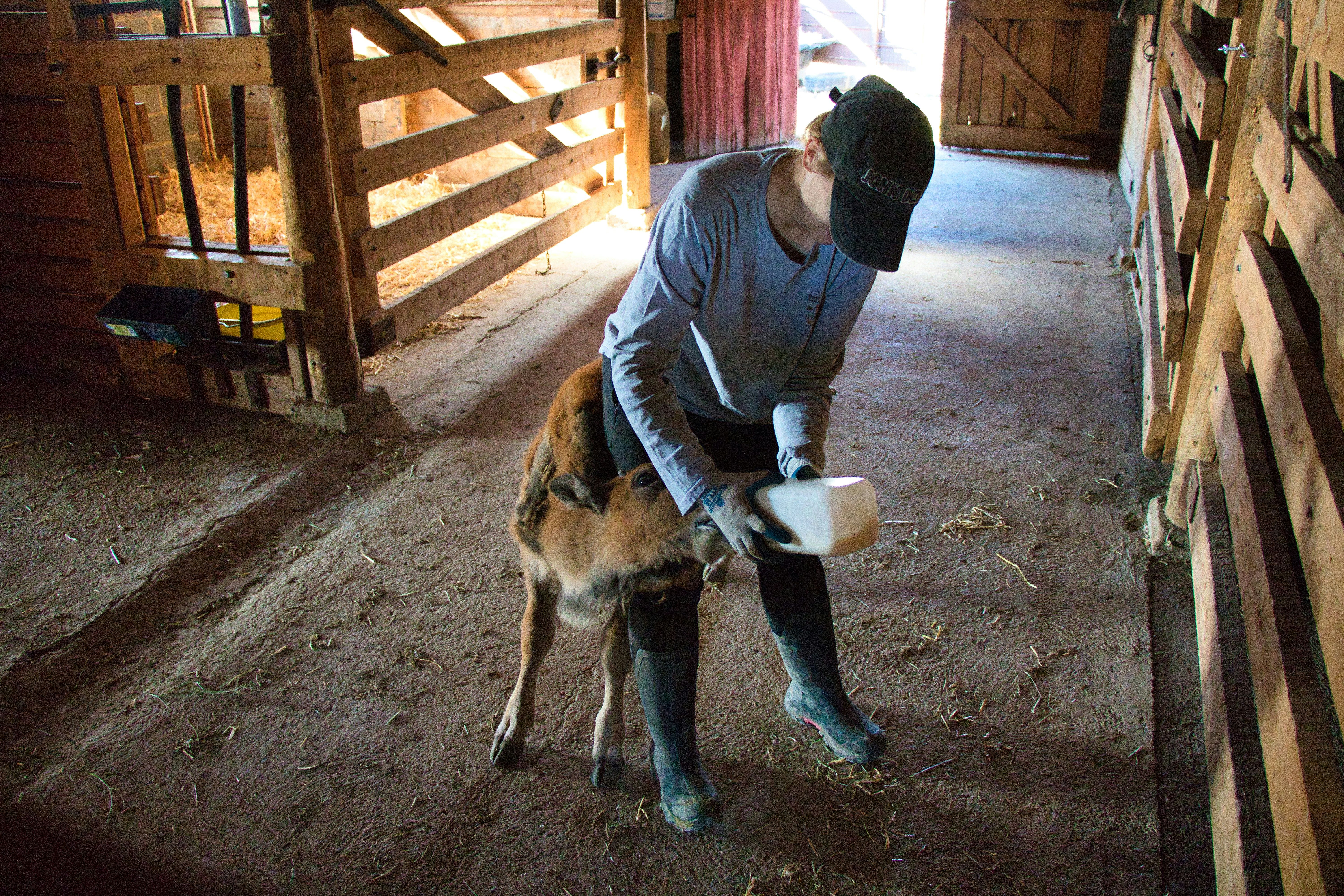
There is a wound check now that was not part of the morning a few months ago.
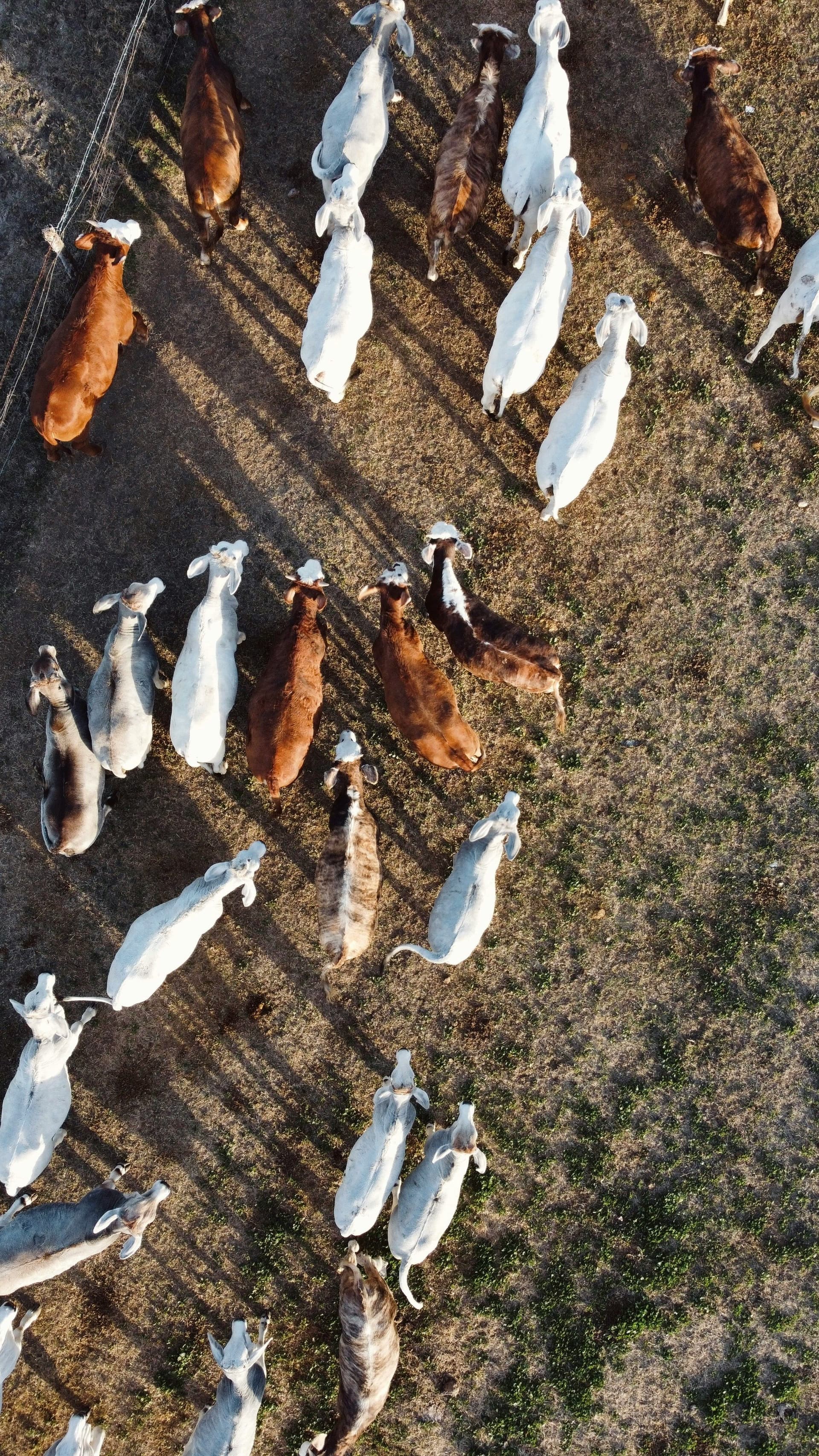
In the brush country south and west of San Antonio, ranchers who run cattle are walking pens at first light looking at navels on newborn calves, at fresh brands, at the small tears a barbed-wire fence leaves on a shoulder.
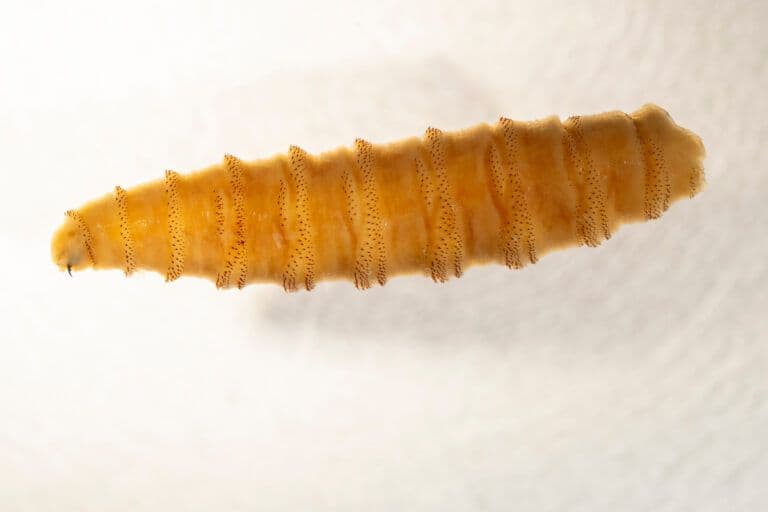
They are looking for something most of them have never seen on their own land: the pale, screw-shaped larvae of the New World screwworm, burrowed into living tissue.
The vet who could confirm it is often a long drive away, and not always free to make a ranch call the same day.
When the parasite found the shortage
The screwworm came back to Texas in June of 2026. The first confirmed case in Texas livestock in roughly sixty years was a three-week-old calf near La Pryor, in southwestern Zavala County. A rancher noticed the animal in distress and called a veterinarian, who found larvae in its umbilical area. Two days later, a second calf turned up infested about five miles away.
The United States eradicated screwworm in 1966 and kept it out for two generations. When it crossed back over, the county it landed in was Zavala. And Zavala is a county the federal government had already flagged as short of veterinarians.
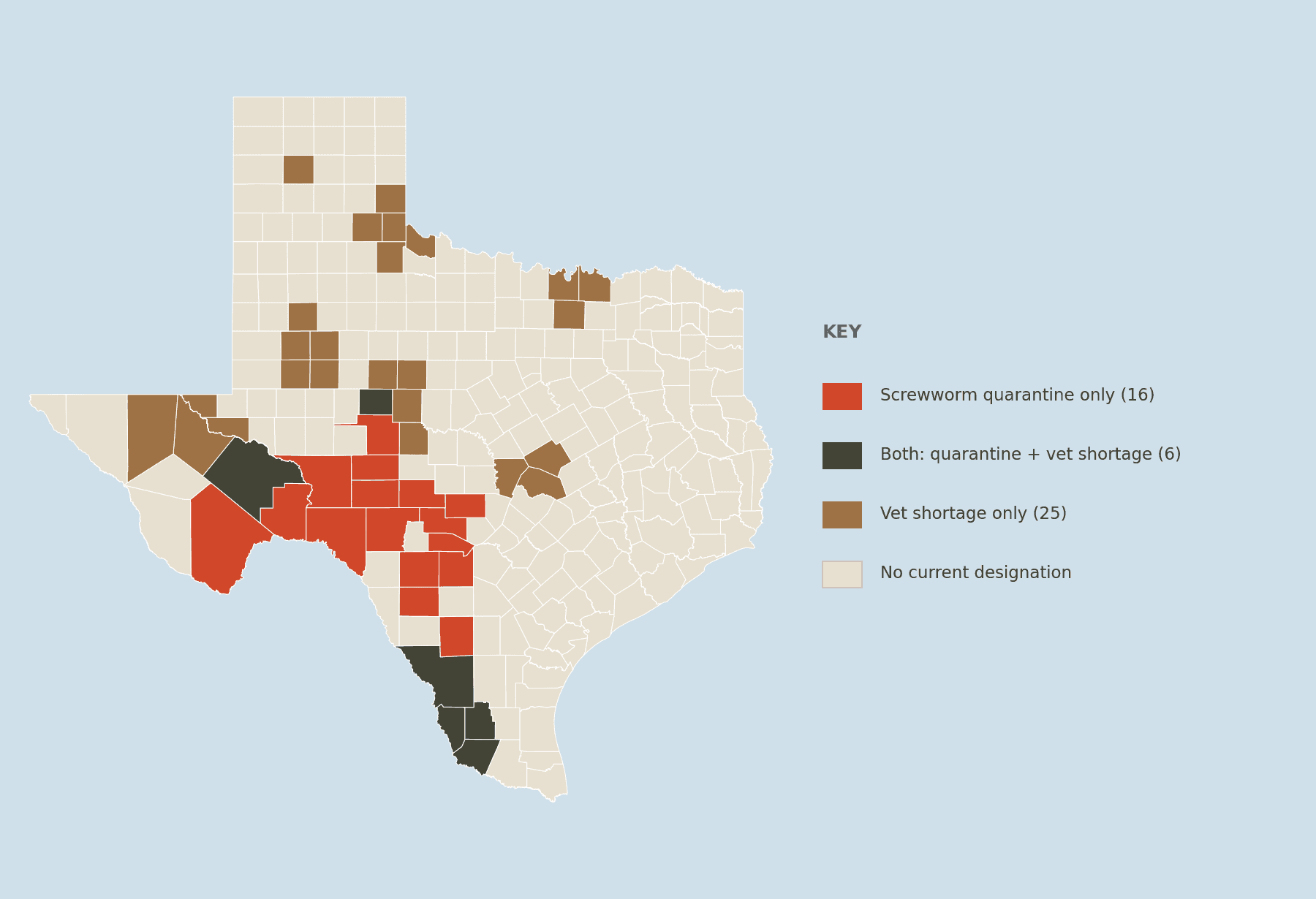
That is not a coincidence anyone engineered. It is a map. Lay the screwworm quarantine zones over the counties Texas has designated as veterinary shortage areas, and the two shapes sit on top of each other across West Texas and the border. Zavala, Uvalde, Coke, Zapata, Starr: each one is under a screwworm movement restriction, and each one carries a rural veterinary shortage designation.
The parasite whose management depends most on a trained eye and a fast veterinary response arrived in the part of the state with the fewest large-animal veterinarians to give it. By early July, parts of twenty-two counties were under quarantine, and animals could not leave those zones without a certified inspection first. The disease and the shortage stopped being two separate problems on the same land. In the brush country, they became one problem wearing two names.
What staying ahead looks like
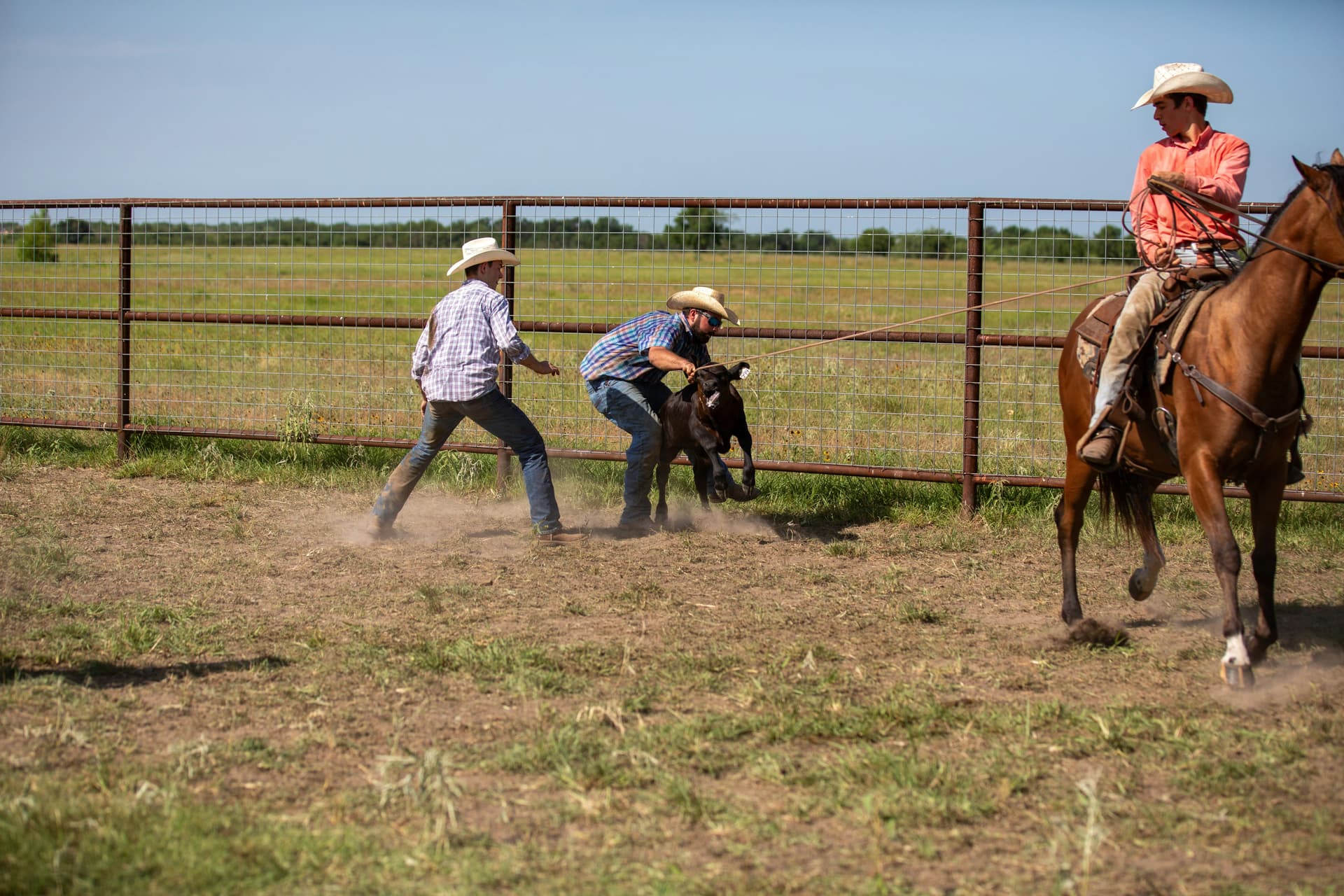
Ranchers who work these counties already knew the vet math before screwworm made it urgent. They knew which practice still takes large-animal calls, how far it is, and how the calendar fills during calving and branding. Screwworm did not create that gap. It walked straight into it.
The operations that stay ahead of this share something, and it is not luck or the size of the herd.
It is preparation that happens before the fly ever shows up.
Ranchers who are managing this well can recognize a fresh navel wound on day one instead of day four.
They know the Texas Animal Health Commission reporting line and use it at the first suspicion rather than waiting for certainty.
They understand what a quarantine zone now requires to move an animal, so a load does not get turned back at inspection.
The program built for the gap
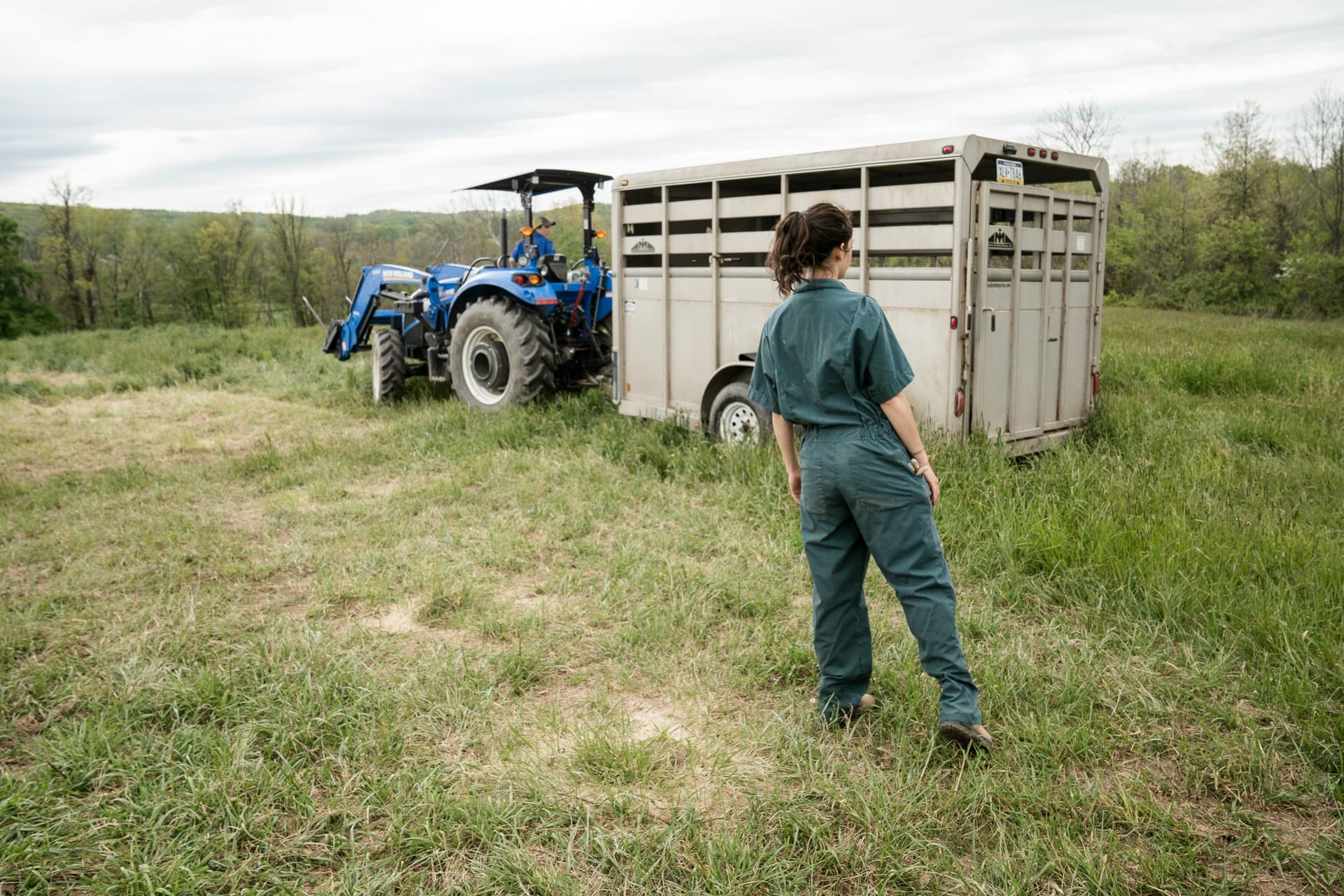
The state has built something specifically for the shortage, too.
The Texas Animal Health Commission and Texas A&M AgriLife stood up a certified inspector program that trains ranchers and others to identify infestation, inspect animals, and issue the movement paperwork a quarantine zone requires.
Several hundred people have already gone through it.
It does not replace a veterinarian. It extends the reach of the ones who are there, which is the honest response to a county that does not have enough of them.
Comparing notes across the fence line
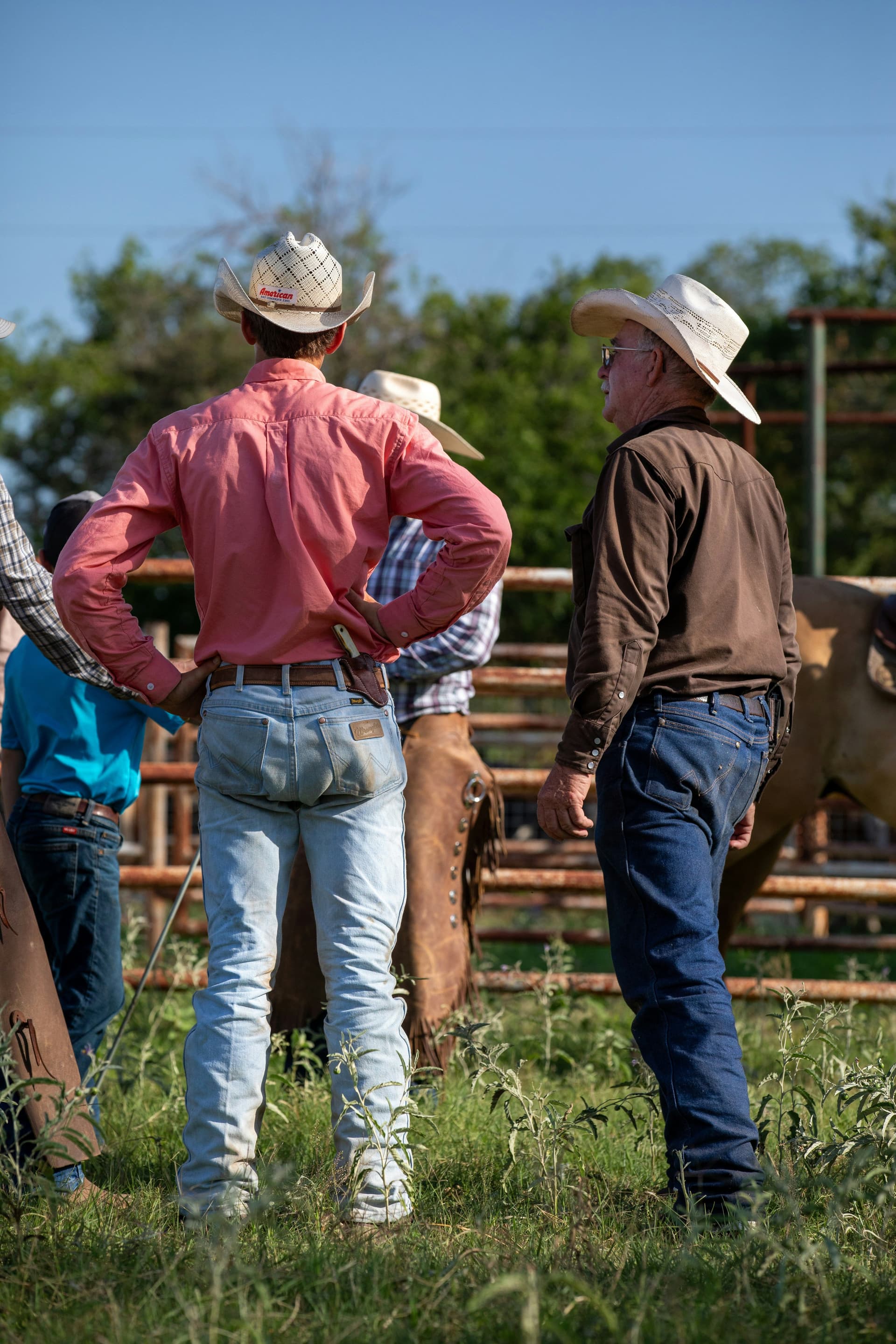
No one is working through this in isolation, even where the nearest neighbor is miles down the road.
Ranchers in the quarantine counties are already trading what they are seeing: which wounds turned out to be screwworm and which turned out to be nothing, who they managed to reach for a ranch call and how long it took, whether the certified inspector course was worth a day away from the place.
That knowledge is moving faster between operators than it is coming down from anywhere else.
TexasRanches.com has opened a thread for that conversation to live and keep going as the situation changes, county by county, through the season. It is a place to compare notes with people running cattle on the same ground, under the same quarantine lines, facing the same distance to the nearest large-animal vet.
If you run livestock in or near a quarantine county, join the conversation at TexasRanches.com and post what you are seeing on your place and who you have been able to reach. The earliest read on this outbreak is coming from the people walking the pens at first light, and it belongs in one place where the rest of us can find it.
Part 2 looks at what the brush country is actually doing to hold the line: the daily inspections, the sterile fly releases, and the inspector program filling the gap the vets cannot.
The Sterile Fly and the Trained Eye: How Texas Is Fighting Screwworm
Part 2 of a three-part series on the New World screwworm outbreak and the rural veterinary shortage in Texas. Part 1 laid out the overlap: the outbreak began in Zavala County, a designated veterinary shortage county, and the quarantine map sits on top of the counties with the fewest large-animal vets.

Screwworm Exposed the Vet Shortage. Closing It Is the Longer Fight.
Part 3 of a three-part series on the New World screwworm outbreak and the rural veterinary shortage in Texas. Part 1 mapped the overlap. Part 2 covered how the brush country is holding the line. This part looks at why the vets were thin to begin with, and what it would take to change that.

Explore beyond the story
Browse listings, find businesses, or save this article for later.
 Listings
 Directory
Get the Newsletter
One reported story on Texas land, delivered free every month.
By signing up, you agree to receive emails from Texas Ranches. We never sell your address, and you can unsubscribe anytime.