

Texas Wildflowers: What grows where, and how to support it on your land
From Hill Country limestone to West Texas desert, the wildflowers that thrive on your land are already waiting. You just have to know when to mow, when to seed, and when to leave it alone.
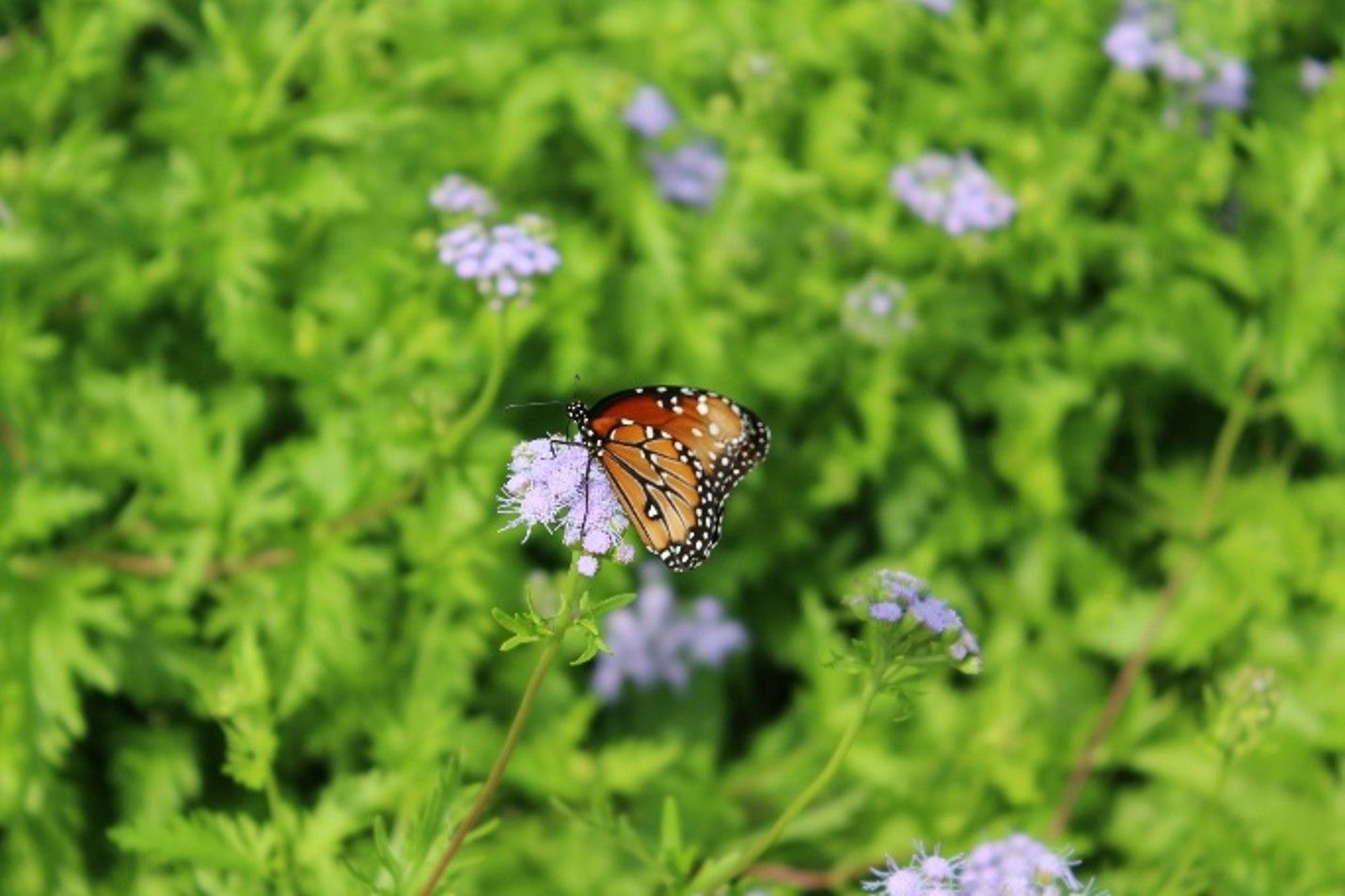
Texas spans ten distinct ecoregions, and wildflower composition shifts significantly across them. Region matters more than most people expect.
Hill Country
This is the classic Texas wildflower scene. Limestone soils, rolling terrain, and reliable spring rains produce the dense, multispecies blooms that fill roadsides and open hillsides each March and April.
Bluebonnets, Prairie fire (Castilleja spp), Firewheel (Gaillardia pulchella), coreopsis, and winecup all show well here. The visual effect — carpets of color across open hillsides — requires the right winter moisture to produce it.
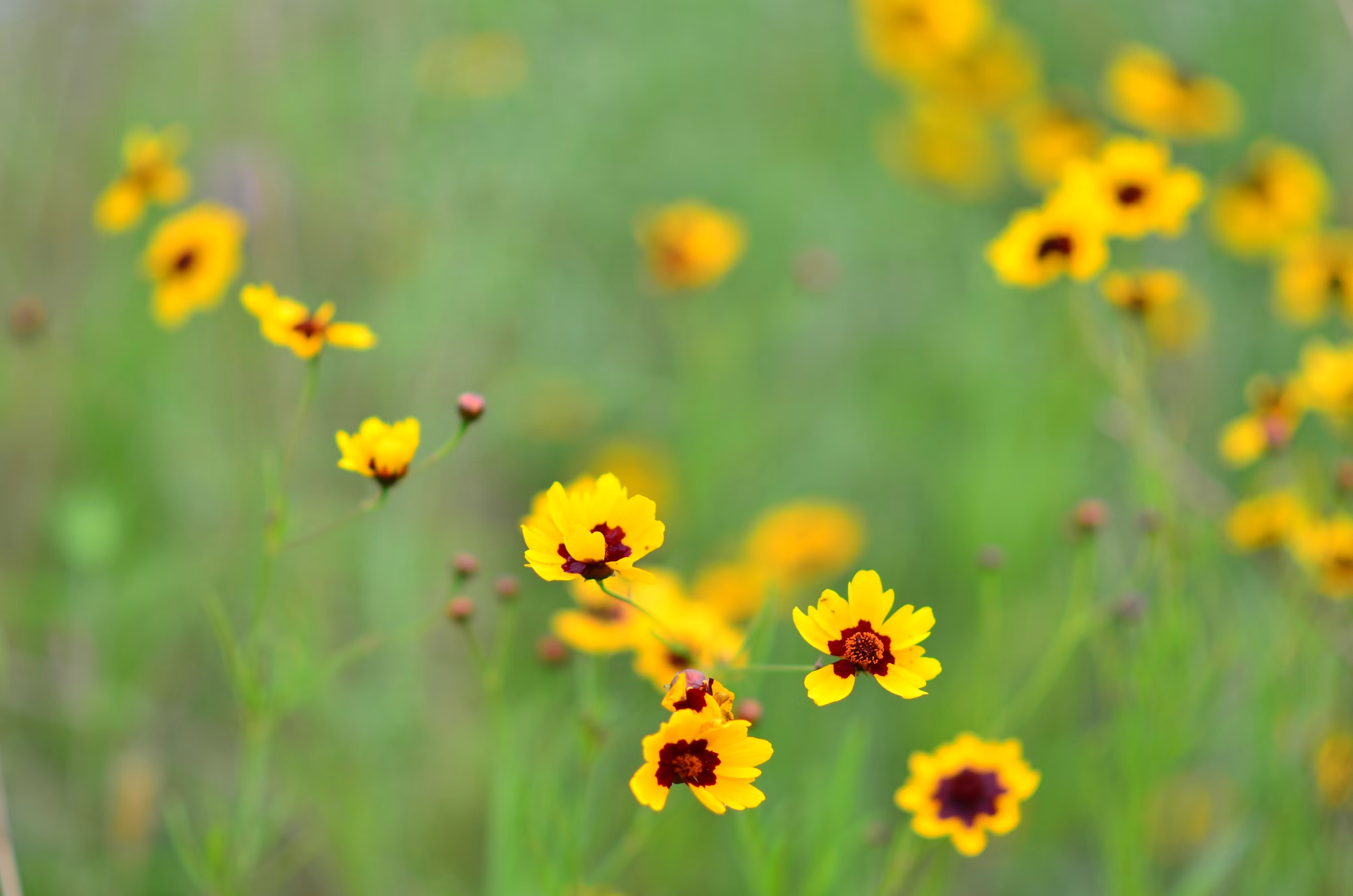
Coreopsis in bloom — a Hill Country staple that shows well alongside bluebonnets and prairie fire each spring.
Gulf Coast Prairies and Marshes
Flat terrain, clay-heavy or sandy soils, constant humidity. Blooms here tend to spread across open prairie rather than concentrate on hillsides.
Bluebonnets appear in good years alongside Prairie fire and coreopsis. Gulf coast penstemon, gulf muhly, partridge pea, and pink evening primrose are reliable performers. Closer to the shoreline, beach morning glory stabilizes dunes and blooms from spring through late fall.
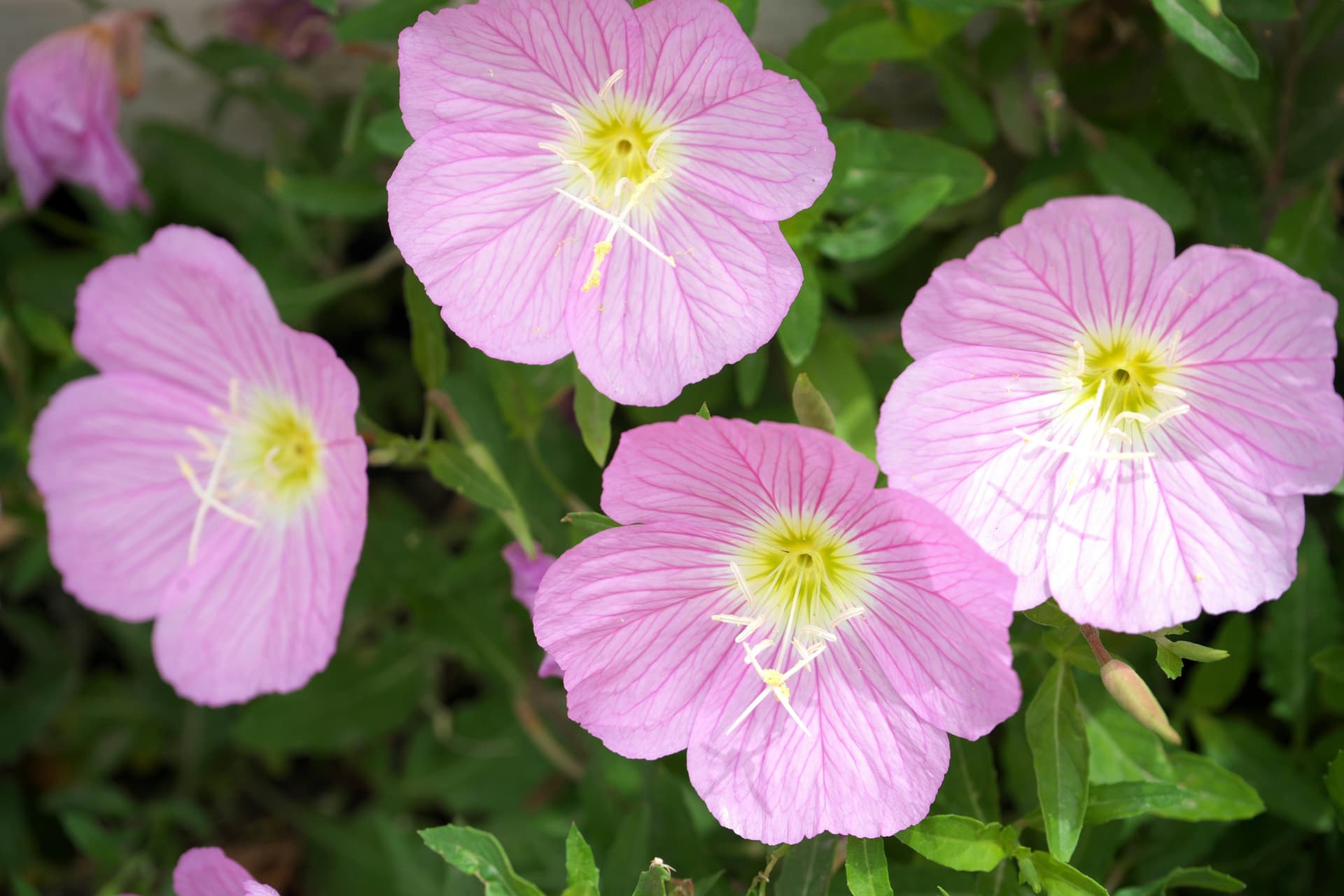
Pink evening primrose — a reliable Gulf Coast performer that spreads across open prairie from spring through early summer.
East Texas — Piney Woods
Forested, acidic soils and higher rainfall support a different palette entirely: Drummond's phlox, spiderwort, blue-eyed grass, and wild petunia in scattered patches rather than broad sweeps. Expect surprises.

Spiderwort — one of the scattered, shade-tolerant wildflowers that show up across East Texas's forested piney woods.
North Texas — Blackland Prairie
Deep black clay soils and wide-open terrain support a strong mix of prairie wildflowers. Upright prairie coneflower (Ratibida columnifera), coneflower, prairie verbena, and Firewheel appear alongside bluebonnets and Prairie fire.
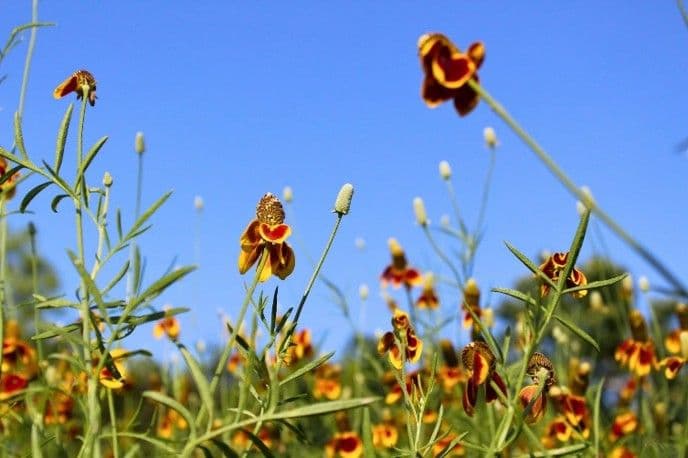
Upright prairie coneflower - a reliable Blackland Prairie performer
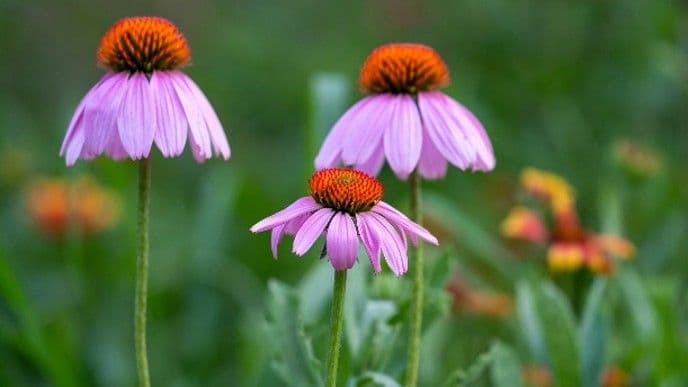
purple coneflower - a reliable Blackland Prairie performer
West Texas — Trans-Pecos and Desert
This region runs on a different timeline. Rain is infrequent and unpredictable — but when it comes, the response is fast and dramatic.
Desert marigold, sand verbena, prickly poppy, and the Big Bend bluebonnet (Lupinus havardii) — a distinct species, taller than its Hill Country relatives — can produce short-lived but dense blooms after a significant rain event.
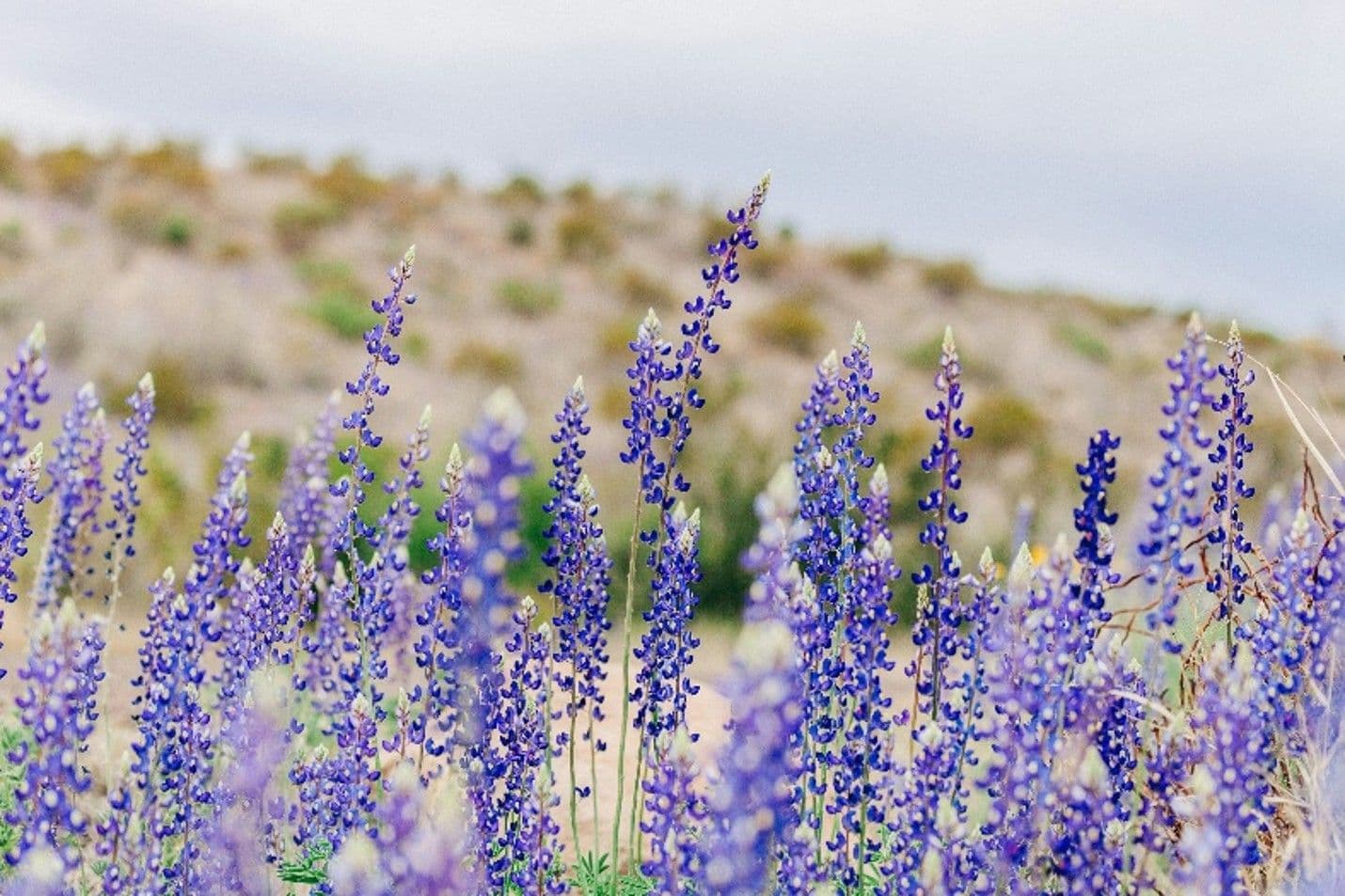
Big Bend bluebonnet (Lupinus havardii) — taller and later than its Hill Country relatives.
Supporting Wildflowers on Your Land
Managed well, wildflowers support pollinators, improve soil, and bring real visual value to a property. A few principles make the difference.
Manage mowing timing. The most common way landowners suppress wildflowers without realizing it is mowing too early. Most spring-blooming species need to complete their seed cycle before the ground is cut. Delay until late May or June — after seed heads have dried and dropped — to let next year's plants establish.
Seed in the fall, not the spring. Most Texas wildflowers germinate in fall, overwinter as rosettes, and bloom the following spring. Mid-October through November is the productive window for most species across the state. Seed spread in spring won't produce blooms that season, and much of it won't establish at all if conditions dry out quickly.
Match species to your soil and region. What thrives on Hill Country limestone won't necessarily perform on East Texas sandy loam or Blackland Prairie clay. The Native Plant Society of Texas and your local Texas A&M AgriLife Extension office are both good resources for identifying which species are well-suited to your specific county.
Don't over-manage. Wildflowers adapted to lean, undisturbed soils don't benefit from tilling or fertilizing. Adding nitrogen where you want bluebonnets tends to favor grasses and weedy competitors instead. Leave areas you want to naturalize largely alone once seeded.
Give it time. A newly seeded area may produce a thin bloom in its first year and a much stronger one in the second or third as the seed bank builds. Set up the right conditions — then let the land do its work.
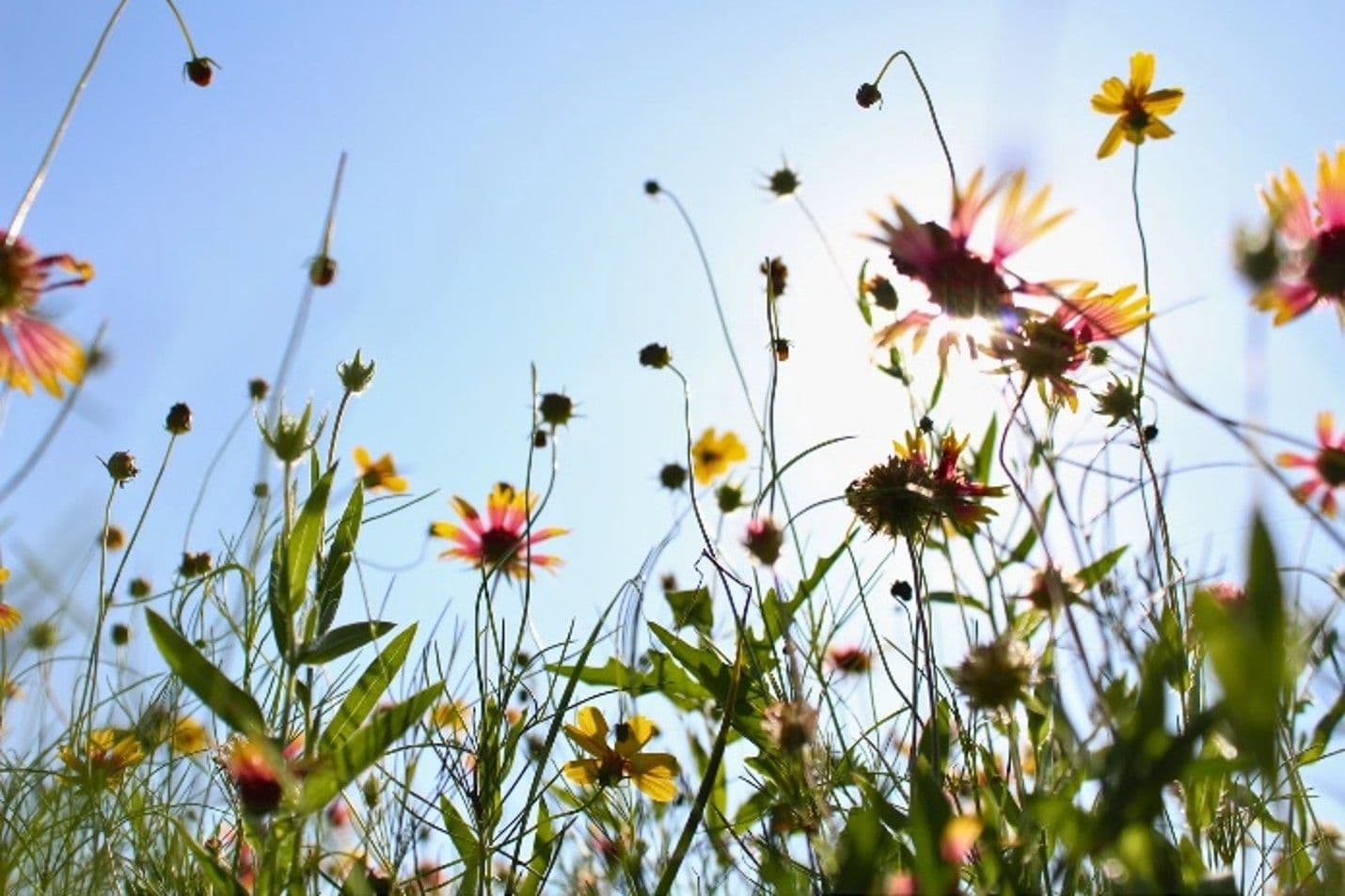
Firewheel and coreopsis reach toward the sun.

Good ranchers know we don't do this alone. This is a place to discuss everything from legacy planning, herd management, and land stewardship to innovative revenue models shaping the next generation of ranching in Texas.
Continue the Conversation on the Forum
Join the discussion with Texas landowners, ranchers, and experts.
New to TXR? Create a free account to join the conversation.
Explore beyond the story
Browse listings, find businesses, or save this article for later.
 Listings
 Directory
Get the Newsletter
One reported story on Texas land, delivered free every month.
By signing up, you agree to receive emails from Texas Ranches. We never sell your address, and you can unsubscribe anytime.