

Texas Wildflowers: Biology, history, and what grows where
Texas wildflowers aren't delicate or accidental. They're built to wait, survive, and bloom on their own terms. This is the science and history behind one of the state's most recognizable seasons.
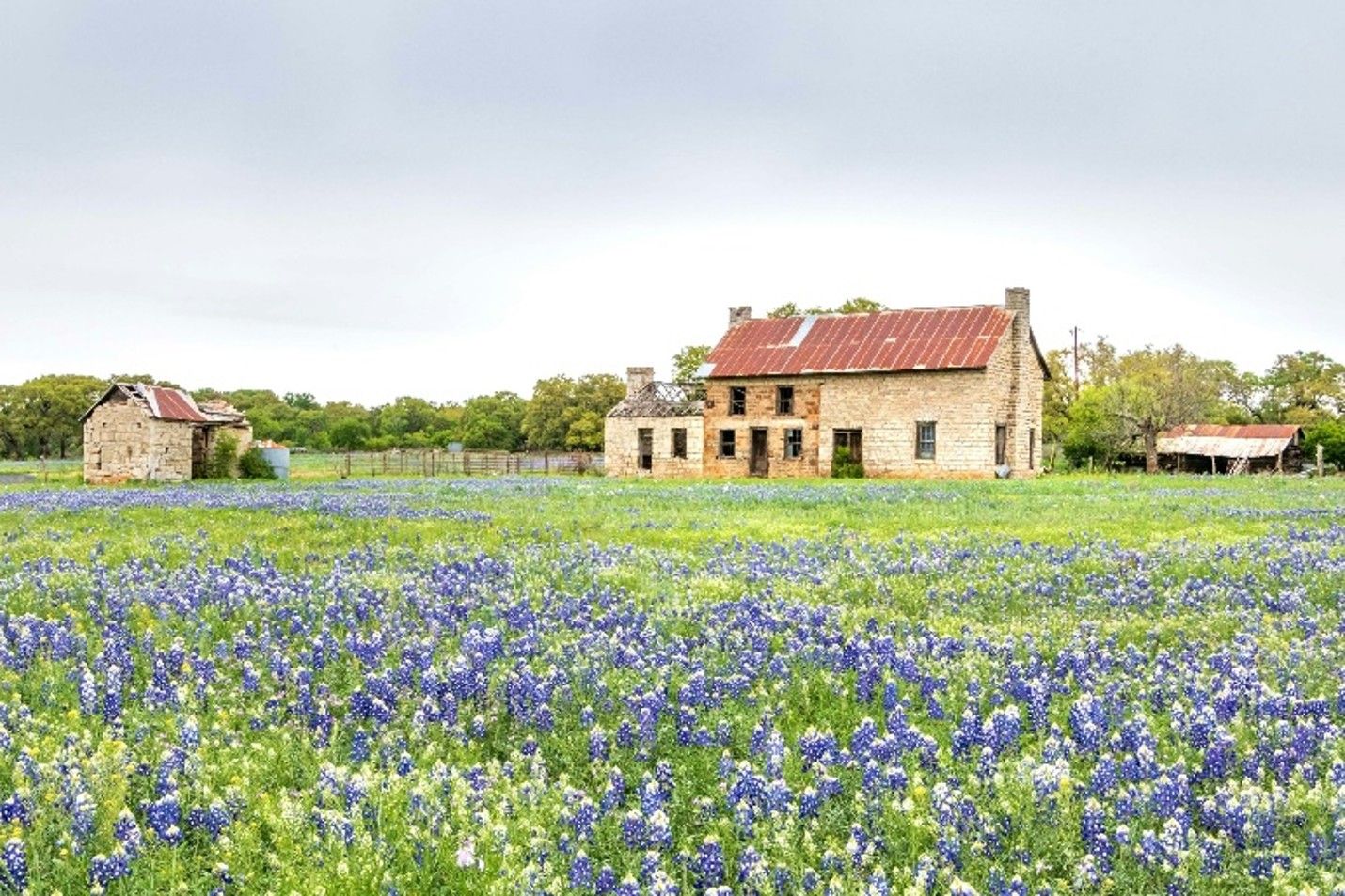
Texas has more native plant species than any other state in the continental United States. A significant share of that diversity shows up every spring — blooming across roadsides, pastures, creek bottoms, and open prairie from late February through June, depending on where you are in the state.
Understanding what drives those blooms, and why they vary so much from one region to the next, starts with biology.
Built to Survive
Texas wildflowers aren't delicate. Most are built around one core strategy: wait for the right conditions, then move fast.
The majority are annuals — germinating, blooming, setting seed, and going dormant in a single season. What makes them effective isn't speed alone, but patience. Many species produce seeds with hard outer coats that resist germination until conditions are genuinely favorable.
Bluebonnets are the clearest example: the seed coat must be weathered by rain, abraded by soil contact, and triggered by temperature shift before the plant will sprout. That's why some years produce dense blooms and others almost nothing. It isn't random. The plant is responding to what the season is actually offering.
Below ground, most wildflowers develop deep taproots that access moisture well below the surface — how they survive the heat and drought that define a Texas summer. Native species are adapted to leaner conditions than most garden plants, which is part of why they outlast imports over time.
Bluebonnets have one additional trait worth knowing: as legumes, they fix atmospheric nitrogen through a partnership with soil bacteria, actively improving the soil they grow in rather than depleting it.
Castilleja Indivisa works differently. It's hemiparasitic — capable of photosynthesizing on its own, but also able to tap the roots of neighboring plants (typically grasses) for water and nutrients. That's why Castilleja Indivisa almost never grows in isolation, and why transplanting it usually fails. Sever the root connection, and the plant doesn't last.
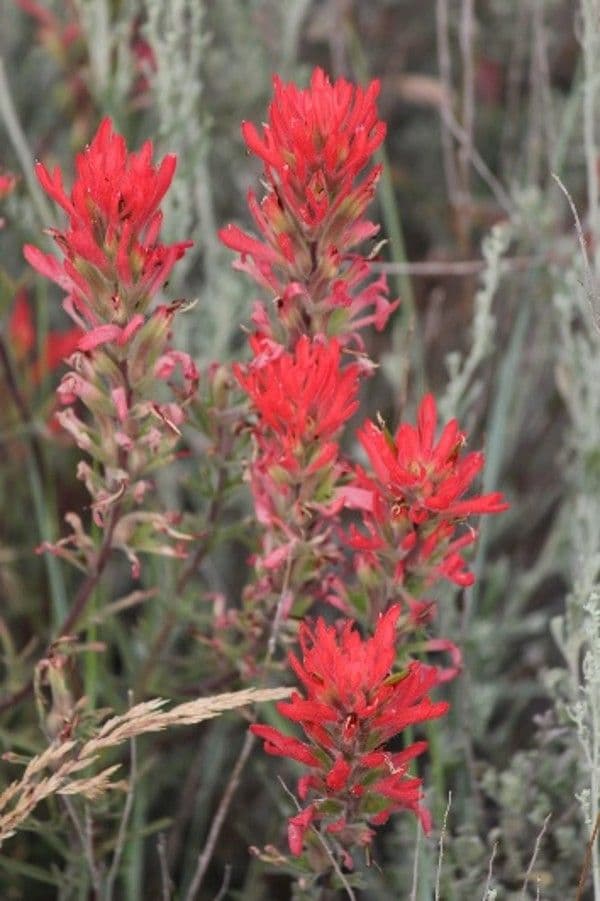
Castilleja Indivisa
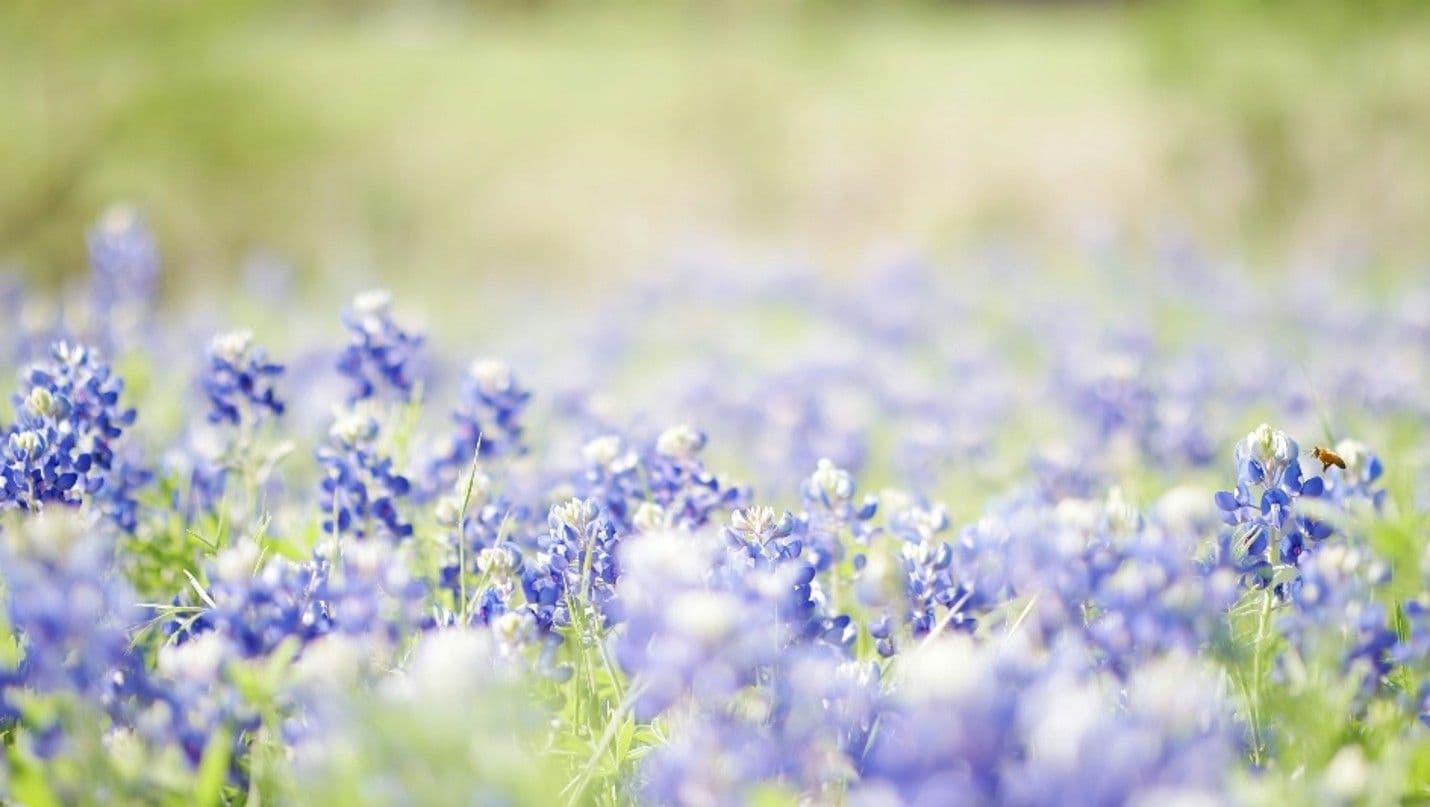
A bee works a stand of bluebonnets in early spring.
Pollination varies by species. Bees, butterflies, and moths handle most of it. Hummingbirds are important for tubular-flowered species, including Castilleja Indivisa. Many wildflowers also produce UV patterns on their petals — invisible to humans but serving as landing guides for insects. A layer of communication happening in plain sight that most people never notice.
Lady Bird Johnson and the Wildflower Program
Before the mid-twentieth century, Texas roadsides looked very different. Native plants were present, but not in the concentrated corridor displays that are now part of the state's identity.
That changed largely because of Lady Bird Johnson. The Highway Beautification Act, passed in 1965, promoted native wildflower plantings along the Interstate Highway System and placed limits on roadside billboards. The Texas Department of Transportation eventually developed its own Wildflower Program — seeding roadsides with native species and managing mowing schedules to protect spring blooms.
Johnson's work continued after she left the White House. In 1982, she donated land and funding to establish the National Wildflower Research Center in Austin. Renamed the Lady Bird Johnson Wildflower Center in 1997, it now maintains more than 970 species of Texas native plants on 284 acres and remains the leading research and education institution on native plant conservation in the state.
The bluebonnet's status as state flower has its own history. Lupinus subcarnosus was designated in 1901, but supporters of the showier Lupinus texensis pushed for decades to change it. In 1971, the legislature resolved the debate by designating all native Lupinus species found in Texas as the official state flower — a practical solution that acknowledged what was already growing across the state.
Texas wildflowers didn't just happen. They were protected, planted, and advocated for — by people who understood that what grows on the land says something about the people who tend it.
This is the first of two parts. Part two covers what grows where across Texas's distinct ecoregions, and how to support wildflowers on your own land.

Good ranchers know we don't do this alone. This is a place to discuss everything from legacy planning, herd management, and land stewardship to innovative revenue models shaping the next generation of ranching in Texas.
Continue the Conversation on the Forum
Join the discussion with Texas landowners, ranchers, and experts.
New to TXR? Create a free account to join the conversation.
Sources
Lady Bird Johnson Wildflower Center — wildflower.org
Native Plant Society of Texas — npsot.org
Texas Highways — texashighways.com
Federal Highway Administration — Highway Beautification Act history — fhwa.dot.gov
LBJ Library — lbjlibrary.org
Texas A&M AgriLife Extension — agrilifeextension.tamu.edu
iNaturalist — Lupinus texensis and Castilleja indivisa species accounts
Explore beyond the story
Browse listings, find businesses, or save this article for later.
 Listings
 Directory
Get the Newsletter
One reported story on Texas land, delivered free every month.
By signing up, you agree to receive emails from Texas Ranches. We never sell your address, and you can unsubscribe anytime.