

How Barbed Wire Came to Texas
The invention that turned Texas grassland into property.
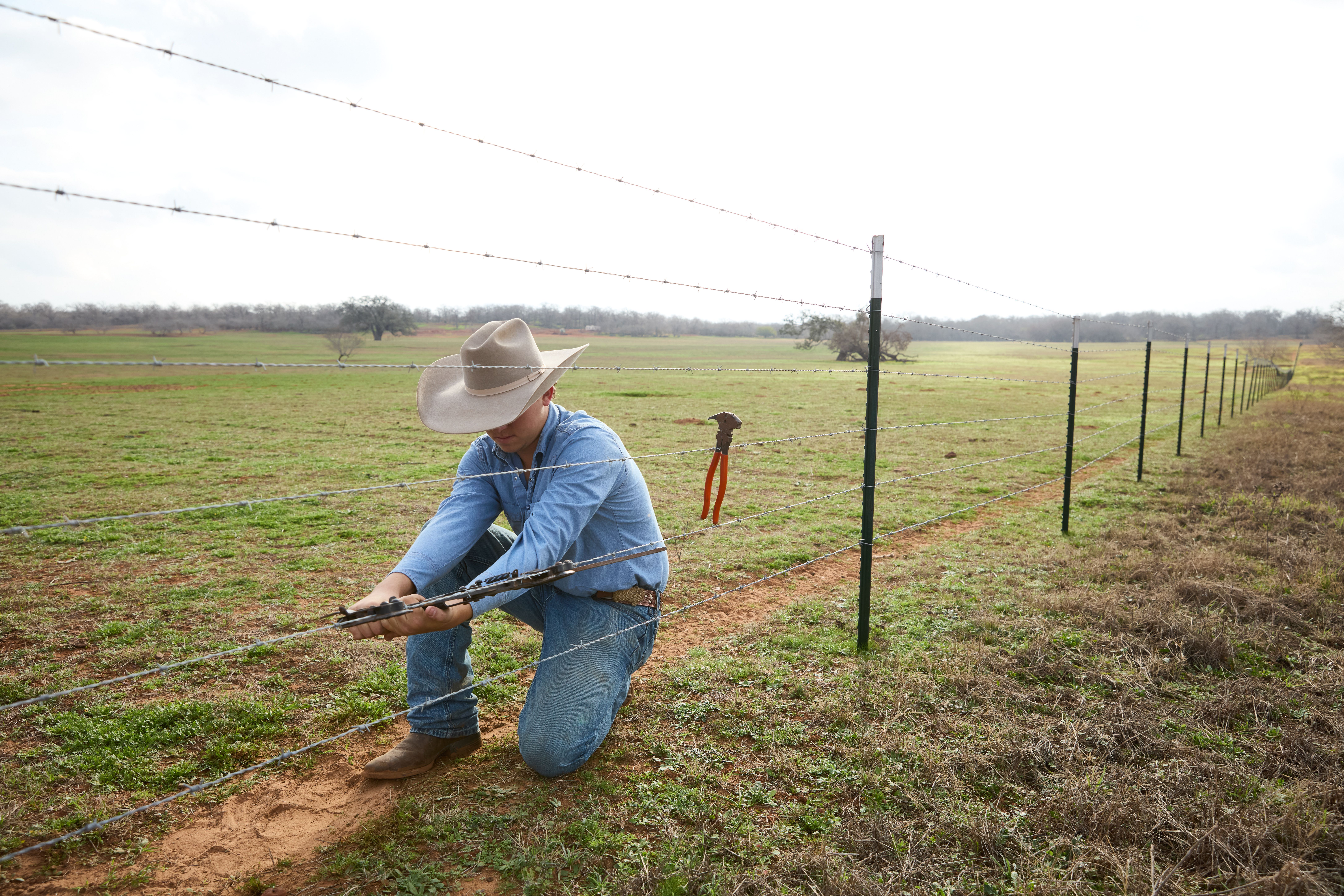
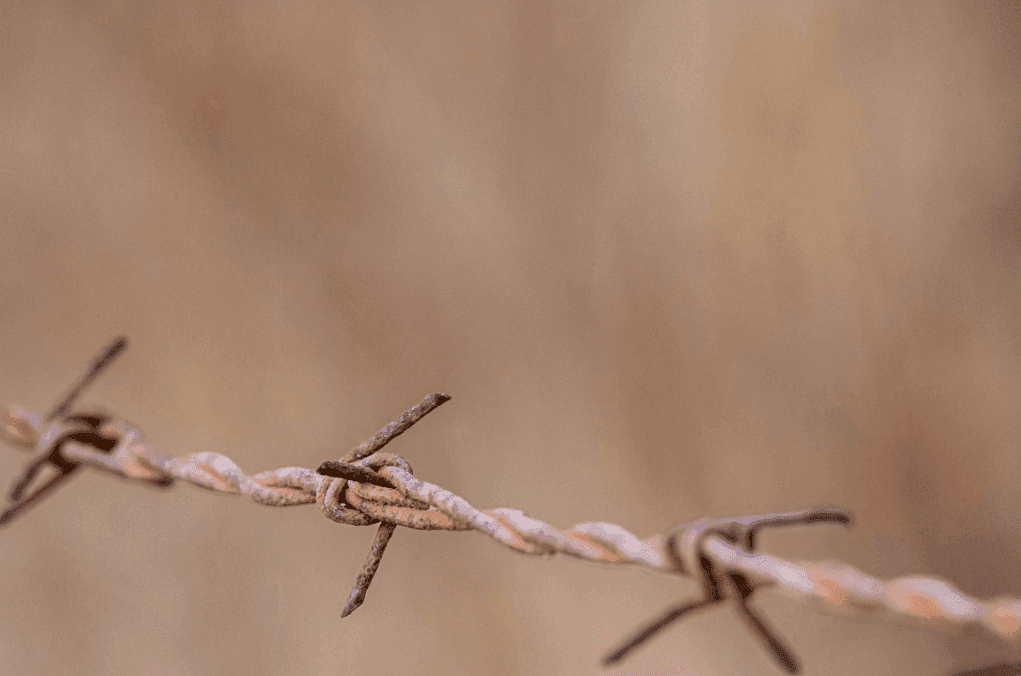
Photo Credit: Chris Briggs
Before barbed wire, Texas land was basically an argument, and had been that way for a long time. As the frontier pushed west after the Civil War, stockmen set up ranches without any title or surveyor's lines to speak of. The real owner, if one ever turned up, would eventually show up and sort it out. Until then, the range belonged to whoever was using it. A deed was just a piece of paper. Grass and water were things you found, not things you owned.
That started to change in January 1876, when a young hardware salesman from Illinois rented a pen on San Antonio's Alamo Plaza, strung it with a new product he was peddling, and dared a herd of longhorn cattle to break through. None of them managed it. John Warne Gates, later nicknamed "Bet-a-Million" Gates for his gambling habits, liked to say the wire was "light as air, stronger than whiskey, and cheap as dirt." He left San Antonio with more orders than the manufacturer could fill.
Within a decade, the open range was done.
What the Land Was Before
The Texas cattle industry didn't start with deeds. It started with grass, water, and whoever got there first.
Before barbed wire showed up in a usable form in the mid-1870s, there really wasn't a good way to fence the plains. Eastern fences leaned on stone and timber, and Texas didn't have much of either across its rangeland. Ranchers tried ditches, mud fences, Osage orange hedges: thorny, slow to grow, and never quite good enough. Smooth wire didn't hold cattle either. Enclosing land on the open plains remained, in practical terms, an unsolved problem.
So ranchers just didn't enclose anything. Before 1874, hardly any stockmen bothered acquiring the land they grazed cattle on. They'd set up a headquarters, run cattle across the surrounding range, and move on whenever a legitimate land claim showed up. A Texas ranch in those years wasn't really a property. It was more of an operation.
The cattle running on that range were longhorns: rangy, heat-tolerant, hard to contain, and well suited to open grazing and long drives. Between 1865 and 1885, something like ten million Texas longhorns got driven up trail to the Kansas railheads and shipped east toward Chicago. The whole idea of the cattle drive only made sense because the land had no edges. You moved the herd because nothing was there to stop it.

The Wire
On November 24, 1874, Joseph F. Glidden of DeKalb, Illinois, patented a fencing material made of barbs twisted around a single strand of wire and locked in place by a second strand wound around it. He called it the "Winner." It ended up being the most commercially successful of the hundreds of barbed wire designs that got patented around that time, and in 1876 Glidden sold his interests, along with the other major patents, to the Massachusetts wire manufacturer Washburn and Moen. By that year, Washburn and Moen had close to a monopoly on the product.
Henry Bradley Sanborn showed up in Texas in 1875 as the first representative selling Glidden's wire. He sold some, but he never really broke the market open.
Gates did. His 1876 demonstration on Alamo Plaza wasn't just a product test, it was theater. Working with a salesman named Pete McManus, he built the pen, invited cowboys and cattlemen to come watch, and let the longhorns make his case for him. The orders that came in afterward outpaced what the factory could produce. (Some accounts place the demonstration at Military Plaza instead; the Handbook of Texas goes with Alamo Plaza, which lines up with Gates taking orders at the nearby Menger Hotel.)
Charles Goodnight, one of the founding ranchers of the Texas Panhandle, saw what the wire meant and acted on it. He fenced his range along Palo Duro Canyon. Clear title to grazing land wasn't optional anymore. When a rancher like Goodnight made that call, it was really the open range admitting it was finished.
Within a few years, that admission would turn into an outright fight over who got to enclose what.
To learn more about this story and what came next, read Part Two: "The Texas Fence-Cutting War and the Law That Ended It."
Sources
Frances T. McCallum and James Mulkey Owens, "Barbed Wire," Handbook of Texas Online, Texas State Historical Association, last updated July 22, 2020.
https://www.tshaonline.org/handbook/entries/barbed-wire
"John Warne Gates," Handbook of Texas Online, Texas State Historical Association.
https://www.tshaonline.org/handbook/entries/gates-john-warne
"Ranching," Handbook of Texas Online, Texas State Historical Association.
https://www.tshaonline.org/handbook/entries/ranching
Henry D. and Frances T. McCallum, The Wire That Fenced the West (Norman: University of Oklahoma Press, 1965). Cited in TSHA Handbook bibliographies above.

Recommended Properties
Trending in Texas
Explore beyond the story
Browse listings, find businesses, or save this article for later.
 Listings
 Directory
Get the Newsletter
One reported story on Texas land, delivered free every month.
By signing up, you agree to receive emails from Texas Ranches. We never sell your address, and you can unsubscribe anytime.