

The Five Ranch Assets Your Tax Return May Be Ignoring
Soil, water, roads, livestock, and timber each qualify for separate tax treatment, and most closing packages never break them out.

When you bought your ranch, you got a deed. You may have gotten a general appraisal. A standard real estate closing package does not include a breakdown of the individual assets sitting on that land. The IRS does not treat your wells, soil nutrients, roads, livestock sales, or timber as the same thing. Each one qualifies for different tax treatment. Each one has a class life. Each one represents a deduction that starts the day you take ownership.
If no one separated them out when you acquired the property, you may be treating a complex operation as a single number. That is not an accounting oversight. It is a missed deduction that compounds every year you do not correct it.
The Assets You Already Own, and What the IRS Does With Them
Ranchers who are working with agricultural appraisers trained in tax code are finding deductions they did not know they had, often on property they have owned for years. Here is what the tax code actually allows, grounded in IRS Publication 225 and the Internal Revenue Code.
Residual soil nutrients
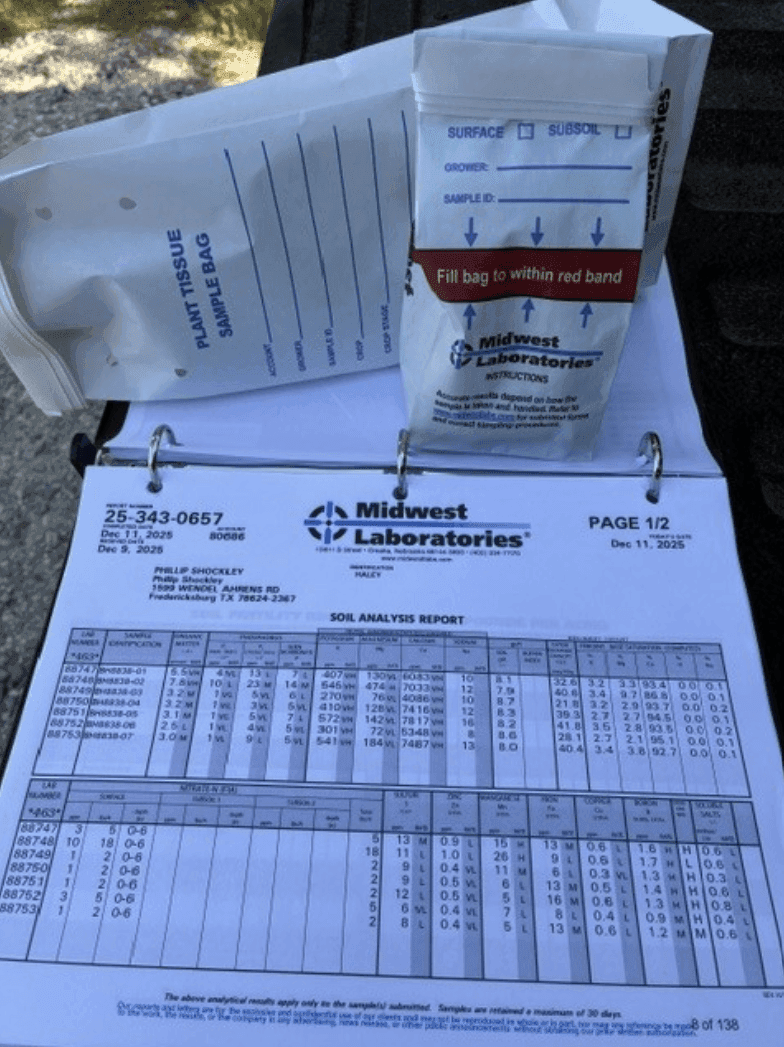
Ranchers understand soil fertility. What most have not been told is that the nutrients already in the soil when they purchased their property can be separated from the land's purchase price and deducted. The IRS, in a Technical Advice Memorandum issued in 1992, ratified the concept that residual soil fertility is a separate asset from the land itself. Part of your purchase price can be allocated to it and deducted.
IRC Section 180 allows a rancher or farmer engaged in the business of farming to deduct the cost of fertilizer, lime, potash, and other soil-conditioning materials. When those nutrients were already present at the time of acquisition, a qualified agronomist can document their presence and fair market value, and that value can be allocated from your purchase price as a deductible expense. The same concept applies to inherited land.
To qualify, you need an agronomist report completed as close as possible to your acquisition date, documenting the specific nutrients present, their measured quantities, and the expected rate of depletion. The further from the purchase date you are, the harder that documentation becomes.
Water wells and irrigation infrastructure
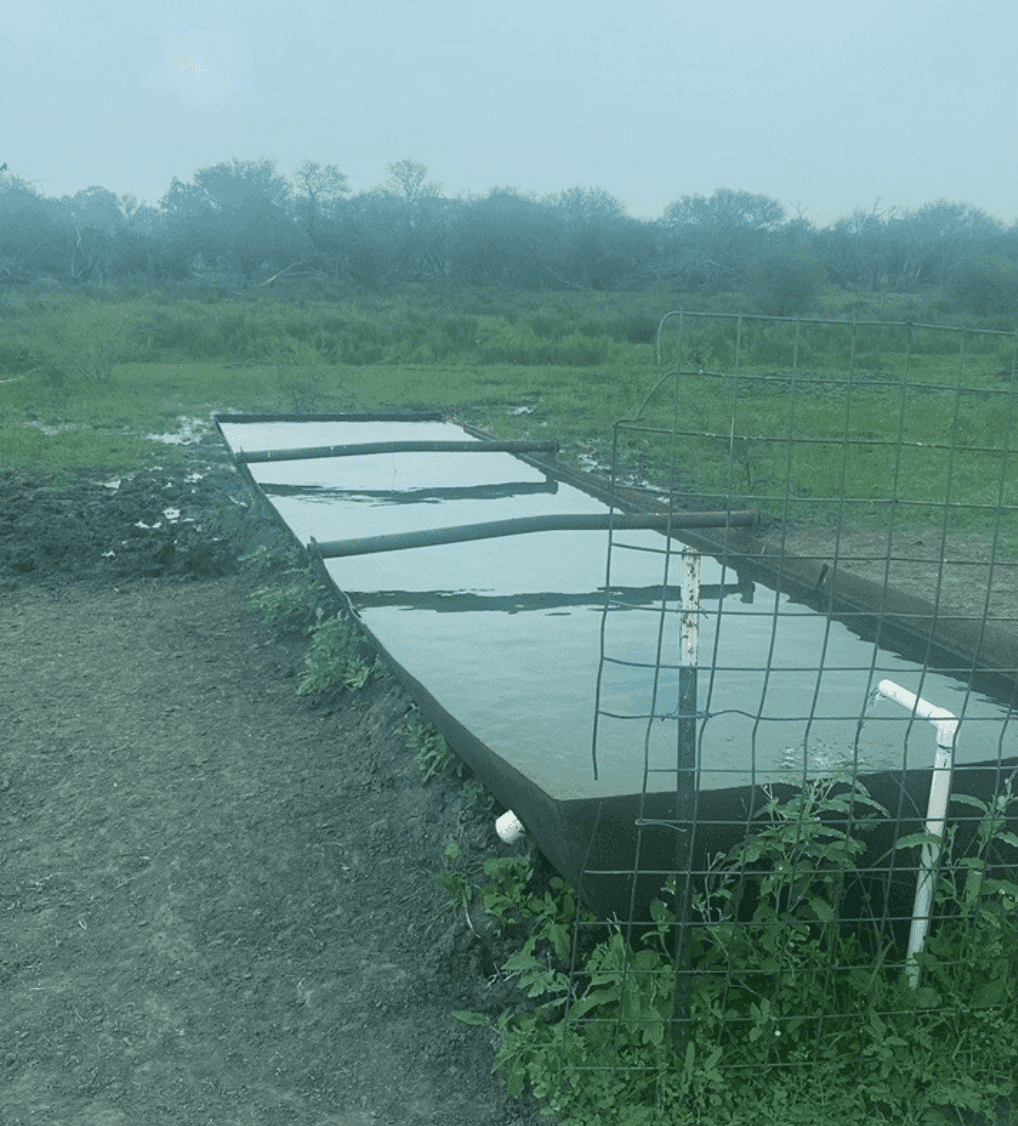
A water well drilled for livestock or irrigation is not land. The IRS draws a clear line in Publication 225: wells and irrigation systems composed of masonry, concrete, tile, metal, or wood are depreciable property with a determinable useful life. They qualify for Section 179 and, under current law, bonus depreciation.
For Section 179 depreciation purposes, the IRS does not allow deductions on earthen dams, unlined ponds, and earthen terraces unless they have a determinable useful life. Anything with a casing, a pump, piping, or structural components qualifies. Many ranches have significant water infrastructure that has never been separated from the land value and depreciated.
That said, some of those earthen structures may still generate a deduction through a separate provision. IRC Section 175 allows the cost of soil and water conservation work to be deducted when performed in accordance with an approved conservation plan and for the purpose of erosion prevention in an agricultural operation. Terracing and earthworks done under that standard are not simply off the table.
Drainage tile systems also qualify as Section 179 property under IRS Pub 225; another item that often goes unclaimed.
Drought-forced livestock sales
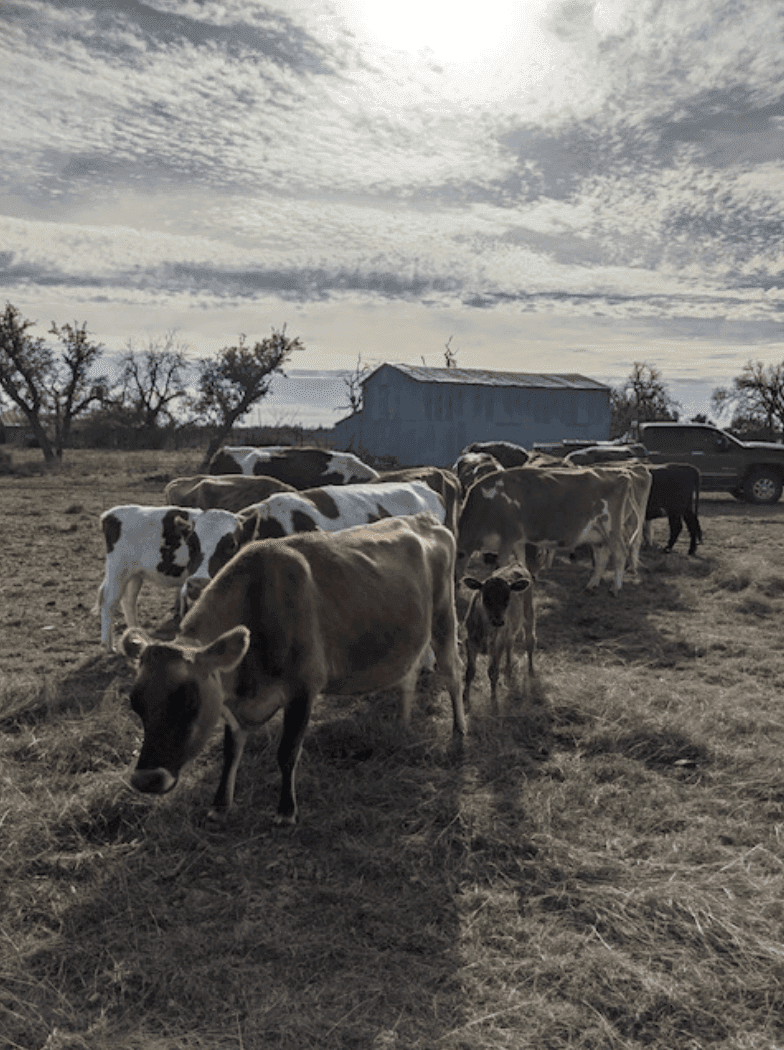
When drought forces a rancher to sell more cattle than their normal practice, the IRS recognizes the involuntary nature of those sales. Under IRC Section 451(e), the income from livestock sold in excess of your typical herd reduction schedule can be deferred to the following tax year, provided the county has been officially designated as eligible for federal drought assistance.
The IRS issues an annual Notice listing qualifying counties. Texas ranchers who sold off herd during drought years and did not use this provision left a meaningful tax deferral on the table. The deferred amount applies only to the excess above normal sales: if you typically sell 50 head in a year but sold 200 because of drought conditions, the income on 150 head can be deferred. Replacement livestock must be purchased within a four-year period, with IRS extensions available in areas with continued drought. Verified: IRC Section 451(e). IRS Notice 2025-52 lists qualifying drought areas through August 31, 2025. Source: irs.gov.
Internal ranch roads

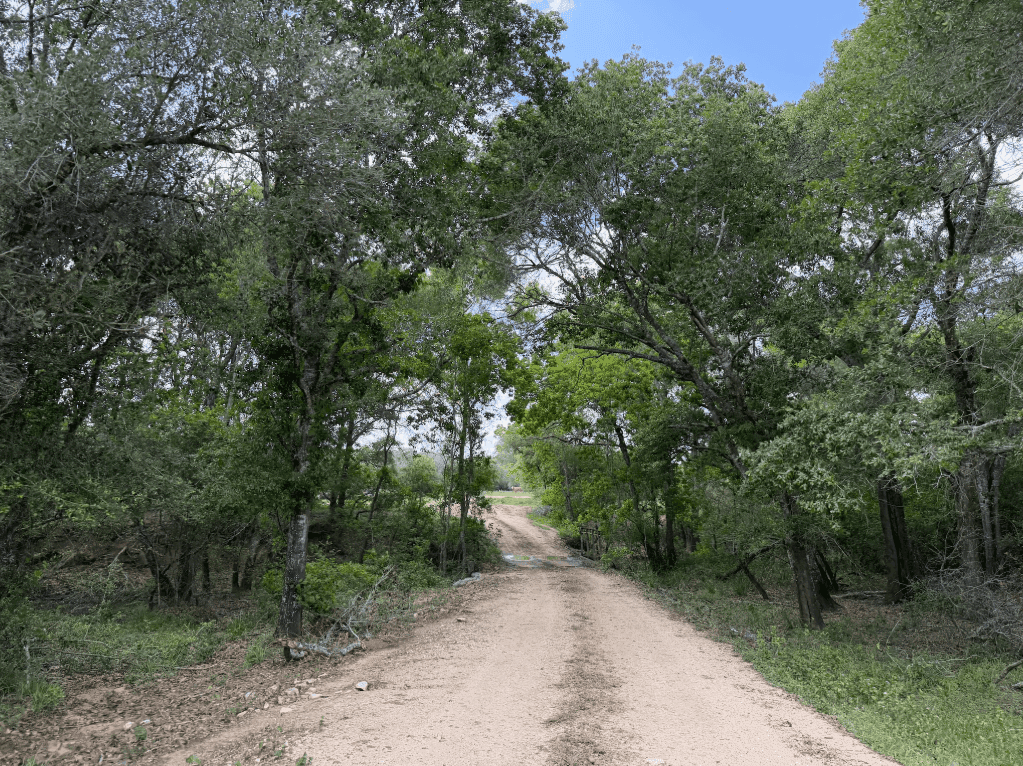
Every caliche road, low-water crossing, and concrete apron on your property is a depreciable asset. Internal roads used for ranch operations are classified as 15-year MACRS land improvements. They do not qualify for Section 179, but they qualify for 100% bonus depreciation under the OBBBA for roads placed in service after January 19, 2025. For roads already in place, they depreciate over 15 years once properly separated from the land value.
The issue is not that ranchers do not know roads depreciate. It is that road value is almost never separated from the land at acquisition. It gets folded into the per-acre price and sits there, untouched. An agricultural appraisal that documents road mileage, construction type, and replacement cost gives your CPA something to work with.
Timber
Texas ranches with cedar, oak, mesquite, or other merchantable timber are sitting on a potential capital gains asset. Under IRC Section 631, timber held as a capital asset for more than one year and sold via a lump-sum contract or pay-as-cut arrangement qualifies for long-term capital gains treatment rather than ordinary income. For a rancher in a higher tax bracket, that rate difference is significant.
The provision does not require a commercial timber operation. It applies to landowners who sell standing timber to a logger or mill under either a lump-sum or percentage-of-cut contract. The timber must have been held for more than a year, and the transaction is reported on Form T (Timber). Verified: IRC Section 631(a) and (b). IRS Publication 225 (2025). Source: irs.gov/publications/p225.
What Changed in 2025
The One Big Beautiful Bill Act, signed July 4, 2025, made 100% bonus depreciation permanent for qualified property placed in service after January 19, 2025. For property placed in service between January 1 and January 19, 2025, the rate was 40%. For tax year 2026, qualified property placed in service now qualifies for the full 100% write-off in the year of purchase.
Section 179 expensing limits also increased: the deduction cap for 2025 is $2,500,000, phasing out once total qualified purchases exceed $4,000,000. For 2026, those figures are $2,560,000 and $4,090,000 respectively. 2025 limits confirmed by IRS. 2026 limits sourced from IRS Form 4562 summary guidance; confirm against the current-year Form 4562 instructions before publishing at irs.gov/pub/irs-pdf/i4562.pdf.
These changes make the documentation work of a formal agricultural appraisal significantly more valuable. The full cost of qualifying assets placed in service this year can be recovered immediately. But only if those assets are identified, documented, and properly classified.

Where Remote RanchHand Fits
Phil Shockley, Owner and Principal of Remote RanchHand LLC in Fredericksburg, Texas, is an agricultural appraiser who specializes in exactly this kind of documentation work. His practice focuses on separating ranch assets into their IRS-recognized components: soil fertility, water infrastructure, structures, livestock, and roads. The result is an appraisal built not just for financing or estate purposes, but specifically to support tax deductions.
Remote RanchHand provides soil fertility appraisals, building and infrastructure assessments, and livestock and water asset evaluations. For ranchers who have acquired property in recent years, or who have never had a formal asset breakdown prepared, that documentation is the first step toward recovering what the code already allows.
If you bought a Texas ranch in the last several years and have been treating it as a single asset on your return, it is worth a conversation with both your CPA and an agricultural appraiser who knows where the IRS draws the line.


Data sources used
IRS Publication 225 (2025), Farmer's Tax Guide — irs.gov/publications/p225
IRS Form 4562 Instructions (2025)
One Big Beautiful Bill Act (OBBBA), signed July 4, 2025 — multiple sources including Nebraska Center for Agricultural Profitability, Senate Finance Committee
High Plains Journal, "IRS codes can help farmers and landowners," Dave Bergmeier, April 17, 2026 — citing Roger McEowen, Washburn University School of Law
Remote RanchHand LLC website — remoteranchhand.farm Open flags: See above section. Key items to verify with Phil and CPA before publishing.
Explore beyond the story
Browse listings, find businesses, or save this article for later.
 Listings
 Directory
Get the Newsletter
One reported story on Texas land, delivered free every month.
By signing up, you agree to receive emails from Texas Ranches. We never sell your address, and you can unsubscribe anytime.