

The Bug in the Bermuda: What Pasture Mealybug Is Doing to Texas Forage
Seventy counties, twenty million acres of pasture, and no pesticide that reliably works.
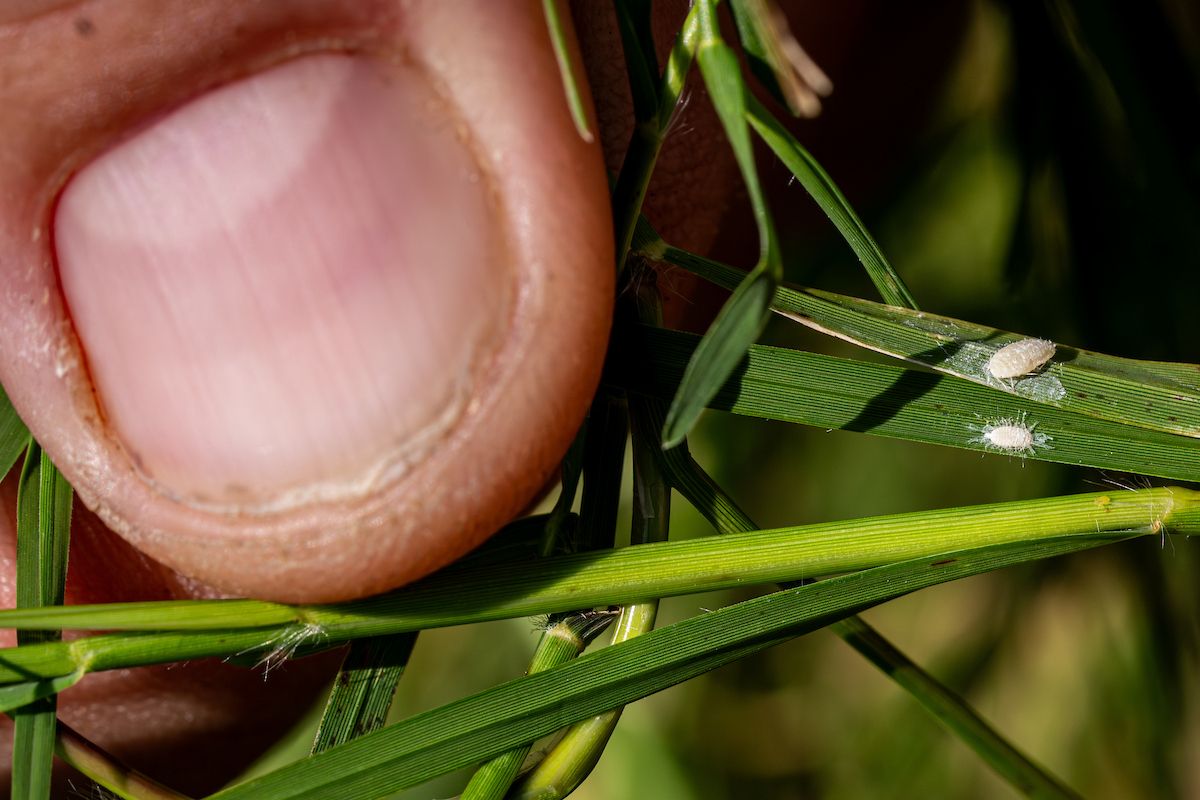
The first thought is always drought. A patch of Bermuda goes off color in July, then yellow, and a rancher who has watched grass die in dry years files it under the usual and waits for rain. When the rain comes and the patch does not green back up, the diagnosis changes, and by then the patch is usually bigger.
What is killing that grass in a growing number of Texas counties is an invasive insect called the pasture mealybug, confirmed in the state in 2025 and now identified in roughly 70 counties from South Texas and the Gulf Coast through Central Texas and as far west as Gillespie County. AgriLife Extension entomologists are adding counties weekly. This is a forage problem, which makes it a cattle problem, which eventually makes it a land problem.

What the damage looks like
The insect itself is small, soft-bodied, and coated in a waxy white material, and it does its damage in the immature stage by feeding on plant sap and injecting toxins that weaken the grass. The visible sequence is fast, showing up within about a week of feeding, and it follows a recognizable order:
Yellowing and discoloration. The first stage, and the one most easily mistaken for drought stress or a fertility problem.
Purpling or reddening. Leaves take on a color drought does not produce. This is the tell worth learning.
Stand loss. In severe cases the grass does not recover, even after good rain. AgriLife has been explicit that badly affected stands may not grow back.
Host range is the uncomfortable part. The pest feeds on Bermuda and Bahia, on bluestems, on johnsongrass, and on other warm-season natives and improved varieties, which covers most of what Texas pasture actually consists of. Checking your own grass means getting down at the soil line and looking at stems and crowns rather than assessing color from the truck.

The scale, as the experts describe it
AgriLife Extension estimates that roughly 20.4 million acres of rangeland and improved pasture sit inside counties where the pest has been confirmed, and its early projections put potential annual forage and grazing losses somewhere between $100 million and more than a billion dollars depending on how far and how severely the infestation runs. Those are the researchers' numbers, and they are projections rather than measured losses.
The number that lands closer to home is a single producer's: a Robertson County operator reported to local news that he lost about half his hay production. Every rancher reading that can convert it into their own arithmetic, which is what makes it useful in a way statewide totals never are.

What is actually recommended right now
This is the part where honesty matters more than helpfulness. There is no proven pesticide program for pasture mealybug and no validated management strategy yet; the research is underway and the recommendations are provisional. What Extension specialists are advising at this stage is practical containment rather than treatment:
Scout your problem spots. Know where the off-color patches are and check them at the soil line, not from a distance.
**Clean your equipment. Haying and mowing equipment moves the pest between fields and between places. This is the recommendation most within a landowner's control.
Manage thick, rank areas. Overgrown stands appear to favor the pest; cutting and baling is currently the best population management tool available.
Report what you find. Your county Extension agent is how the county map gets updated, and the map is how the research gets funded and targeted.
What it means for land, not just grass
Forage is the productive foundation of most Texas land, and anything that reduces carrying capacity eventually shows up in what a place earns and what it is worth. A ranch that ran a cow to twelve acres and now runs one to eighteen has changed as an asset, whatever the market is doing. Buyers who understand this are already asking about stand health in infested counties, and sellers with documented forage records are the ones who can answer.
The honest outlook is that nobody knows yet how this settles. It may prove manageable with practices still being developed, or it may become a permanent cost of doing business in the affected counties. Landowners who are scouting now, keeping records, and staying close to their Extension office are the ones who will have choices either way.
Explore beyond the story
Browse listings, find businesses, or save this article for later.
 Listings
 Directory
Get the Newsletter
One reported story on Texas land, delivered free every month.
By signing up, you agree to receive emails from Texas Ranches. We never sell your address, and you can unsubscribe anytime.