

Rancher Navy: Texas Ranchers Built Their Own Wildfire and Flood Relief Network
From a Facebook group during the Eastland Complex fires to a live dispatch system moving hay, trailers, and rescue teams statewide.
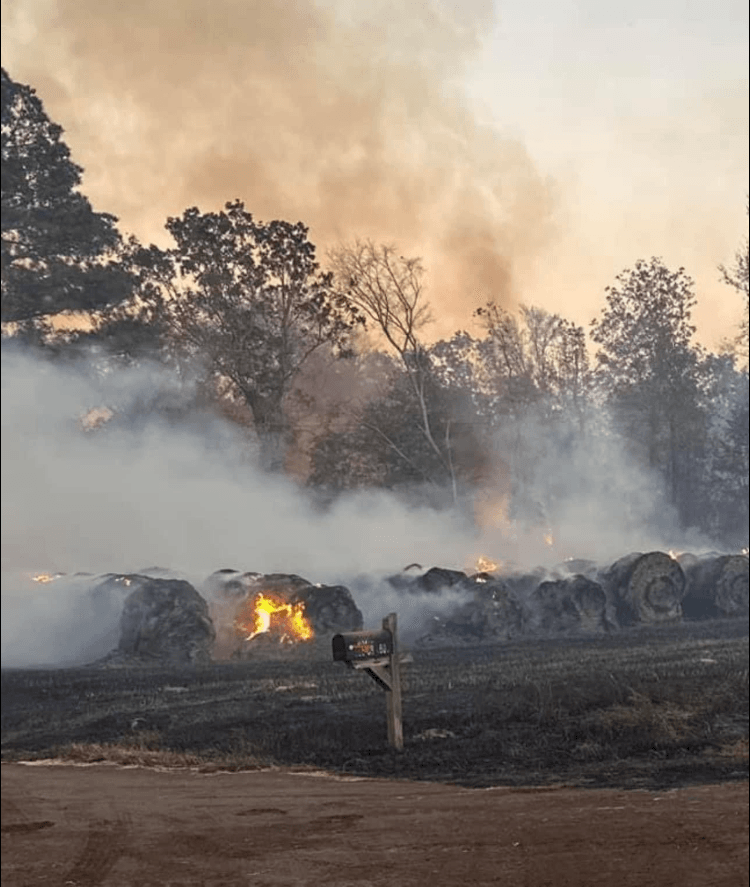
In 2022, wildfires tore through the Eastland Complex in central Texas, and Texas ranchers did what they generally do when a neighbor is in trouble: they started offering to haul hay, lend trailers, and drive loads for people they had never met, all in Facebook comments. Nick Taylor started making the calls to turn those offers into actual deliveries, and Morgan Broome jumped in to help him run the logistics.
The volunteers needed something to call themselves, and Rancher Navy stuck: a nod to the United Cajun Navy, the well-known volunteer flood response group Rancher Navy works alongside. But with a Texas twist. The United Cajun Navy specializes in water rescue; Rancher Navy set out to do something more specific, moving hay, hauling livestock, and getting ranchers what they needed to keep an operation running, not just get people to safety.
Not long after, a wildfire broke out a few miles from Broome’s own property near Millsap. She had horses on the ground and no trailer lined up to move them if the fire turned her way. Holli Geeslin, a rancher Broome had been coordinating hay donations with for months, showed up at her gate with an empty stock trailer and moved the horses herself. That day is when the two women decided to build something more permanent than a Facebook group.
A few months later, the Big L fire tore through Erath County near Lipan, burning roughly 80 percent of one family’s ranch. The ranch belonged to Amy Houston, whose father had ranched in Texas for more than a hundred years before his death just weeks earlier, and the fire took the family’s home along with it.
Broome and Geeslin organized a convoy of semis and personal trailers to haul donated hay north from Waco to reach her. Houston was struck by the support, asked to join the effort, and became the third member of Rancher Navy’s founding board.
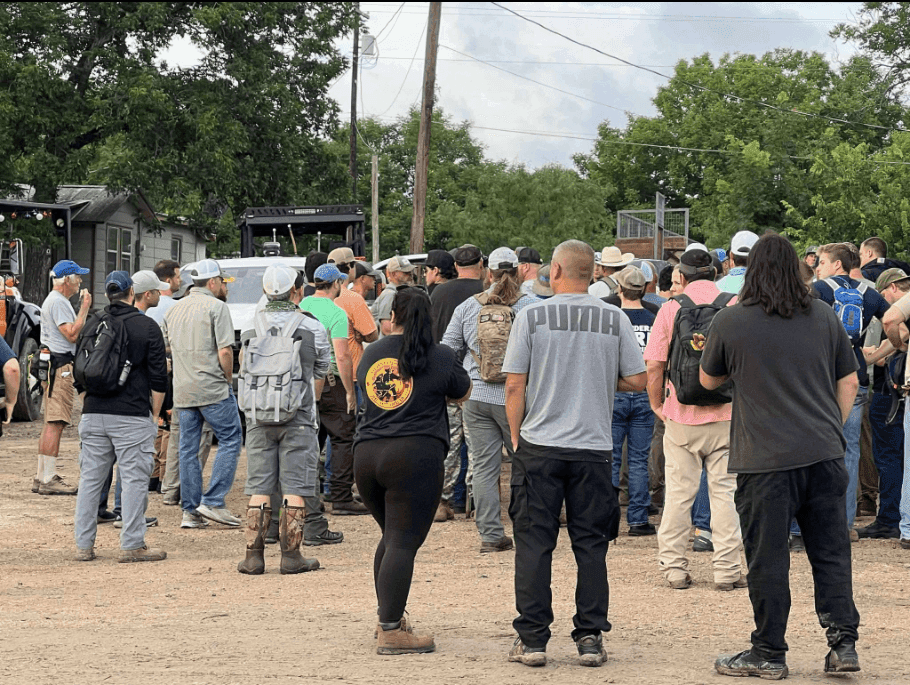
Two years later, when the Smokehouse Creek Fire burned across the Texas Panhandle in February 2024, the largest wildfire in state history, Rancher Navy was already built to answer it. Houston, by then on the board, helped coordinate hay convoys from as far as Kansas and Nebraska, and the response drew coverage from CNN and NBC News, the first time most Texans outside ranching country had heard the group’s name.
That early effort has grown into something Texas ranchers now recognize on sight: a Texas-based, all-volunteer organization built specifically around ranch and livestock needs during a wildfire or flood. Rancher Navy now runs on an eight-person board, a mounted search and rescue unit, and a live dispatch platform built to move resources fast.
What Rancher Navy Provides During a Wildfire or Flood
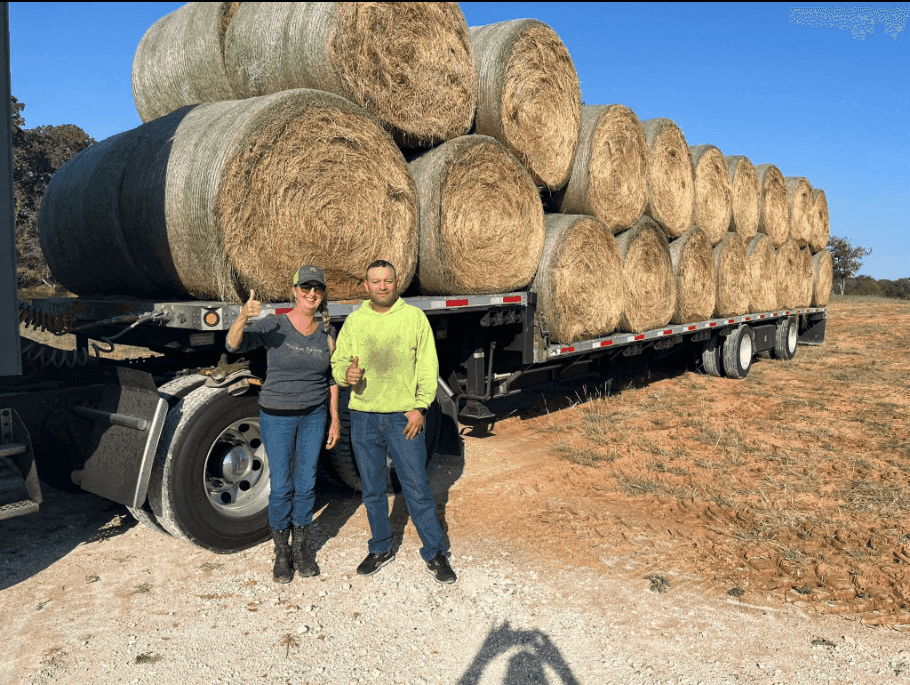
Hay and feed. Mostly round bales, some square, checked for freshness within the last two years before it goes out to a rancher who has just lost everything.
Evacuation transport. A volunteer network of trucks and trailers that can move cattle, horses, goats, and other livestock ahead of a fire or flood.
Triage kits. Burn care and wound treatment supplies, including donated PF Wonder Salve burn cream, staged for animals that couldn’t be evacuated in time.
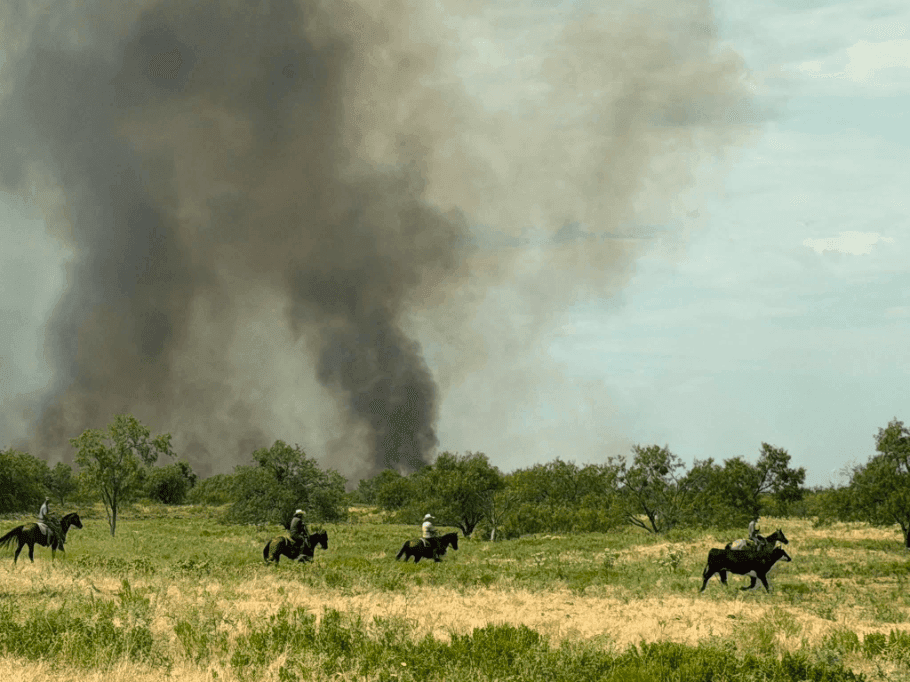
**A mounted search and rescue unit. ** Formed after the 2025 flooding in Kerrville, it has since deployed for a missing-person search near Weatherford and a cattle roundup during this year’s Ross Fire, which burned more than 90,000 acres across Palo Pinto and Jack counties.
A chaplain. Also a working rancher, available to talk with ranchers processing the loss of animals or land.
The mounted unit traces back to the Kerrville flooding. Rancher Navy volunteers started supplying hay nets, corrals, farriers, and fencing panels to a mounted search and rescue camp that had formed near Ingram with no resources of its own. The camp became closely associated with Rancher Navy, and the response was strong enough that a group of volunteers spent the following year turning it into a standing unit.
How Does Rancher Navy’s Support Beacon Relief System Work?
Until this year, the answer was mostly spreadsheets and group texts. In February 2026, Dan Goretskie hauled hay into the Ranger Road Fire response and found Rancher Navy’s founders running the effort out of those spreadsheets and texts. His company, Fuzion Consulting Group, offered to build something better. The result, Support Beacon Relief, was developed jointly by Fuzion Consulting Group and Fuzion Chickasaw Group under the Fuzion Companies brand, and it’s licensed to Rancher Navy at no cost. The platform went live on August 26, 2026, during the Ross Fire, and Fuzion is now rolling it out to other disaster relief nonprofits.
From the ranchernavy.org home page, volunteers and ranchers who need help click “Support the Mission or Receive Aid.”
On the back end, Rancher Navy administrators match hay and supply donations to ranchers and assign haulers from a live dispatch map in the Support Beacon Relief console. Haulers, donors, recipients, and support volunteers all work from the Support Beacon Relief app, on iPhone, Android, or the web.

Donations and requests. Donors list hay, feed, and supplies, and ranchers who need help post what they need.
Vetted haulers. Volunteer haulers register their trucks and trailers, and a Rancher Navy administrator approves each one before it can be dispatched.
Live dispatch. Dispatchers match donations to requests on a live map with weather and wildfire overlays, then assign a hauler.
Load tracking. Dispatch and haulers follow each load from pickup to delivery.
Any device. Volunteers use it on the web or the Support Beacon Relief app for iPhone and Android.

What Rancher Navy Does Not Provide
Rancher Navy does not accept household items: no furniture, no clothing, no personal belongings. Good intentions don’t always arrive as usable donations, and the organization doesn’t have the staff to sort through what doesn’t apply to livestock and land.
Fencing is the harder gap. Broome estimates that replacing fencing on a single ranch can run into six figures, and Rancher Navy doesn’t have the funding to cover losses at that scale. Ranchers rebuilding fence lines are better served by Texas AgriLife, which walks landowners through the state and federal programs available, including cost-share support through USDA.
Broome draws a clean line: Rancher Navy handles the animals, and organizations like the American Red Cross handle the people. Neither replaces the other. Together they cover more of what a disaster does to a ranching community.
How Texas Ranchers Can Prepare for a Wildfire or Flood
Ranchers who come through a wildfire or flood in the best shape are usually the ones who made a handful of decisions before the fire started, not during it.
Build an evacuation plan before there’s smoke on the horizon: who to call, where the animals will go, and who can move them.
Mark every animal that could get separated: a brand, a name or number in spray paint, or a mark down the back that shows up in a drone photo during a flood search.
If evacuation isn’t possible, open gates or cut fences as a last resort so animals have somewhere to run, and close barns so they can’t trap themselves inside looking for shelter.
Swap nylon halters for cotton ones during fire season. Nylon can melt onto an animal’s face; cotton burns off.
Keep a list of animals and veterinary contacts somewhere accessible, the same way a family keeps one for people.Follow the local office of emergency management directly, not only apps like Watch Duty, which rely on volunteer updates and don’t always reflect a fire’s actual perimeter.
Rancher Navy exists because Texas ranchers already show up for each other. What Broome, Geeslin, and Houston built is the structure behind that instinct: a way to turn an offer of help into a hay bale that reaches the right ranch, on the right truck, before the herd runs out of feed.
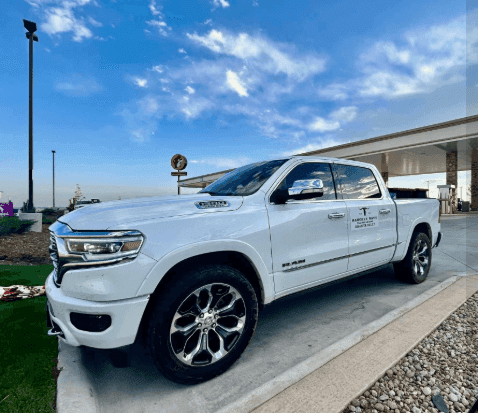
Rancher Navy is a registered 501(c)(3) nonprofit, so every donation is tax-deductible, whether it is cash or one of the specific goods the network is genuinely short on. Cash is more useful most of the time: it covers fuel for volunteer haulers, emergency feed purchases, and supplies that spoil if stored too long, the way donated goods often do. For anyone who would rather send something directly, Rancher Navy keeps a running Amazon wish list at https://a.co/08lNq0AR.
For a Texas rancher, the useful move isn’t waiting until there’s smoke on the horizon.
Need help right now? Call the Rancher Navy dispatch line at (817) 264-6444.
Want to volunteer a truck, trailer, hay, or land? Sign up at ranchernavy.org so the network already knows what you can offer before the next fire or flood.
Want to give directly to the response? Donate through ranchernavy.org or send something from the Amazon wish list above.
Explore beyond the story
Browse listings, find businesses, or save this article for later.
 Listings
 Directory
Get the Newsletter
One reported story on Texas land, delivered free every month.
By signing up, you agree to receive emails from Texas Ranches. We never sell your address, and you can unsubscribe anytime.