

Texas Fever and the Tick Riders
For decades, healthy-looking Texas cattle killed every herd they passed. Men still ride the border because of it.
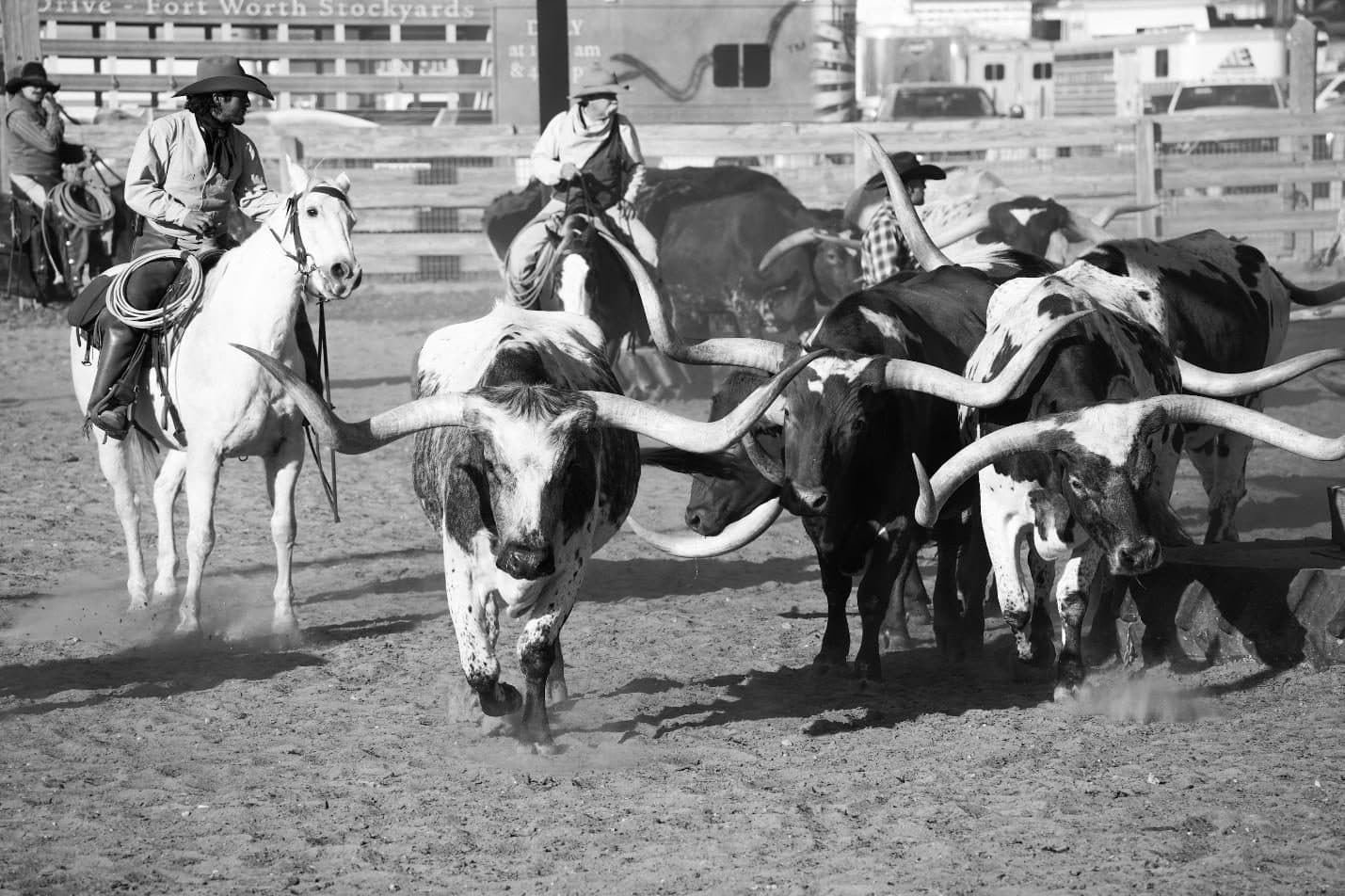
In the spring of 1866, a 16-year-old drover named James M. Daugherty pushed a herd of Texas longhorns north up the Shawnee Trail. In southeastern Kansas, a band of men met the herd. They stampeded the cattle and killed one of his trail hands.
A disease no one could see
Farmers in Missouri and Kansas had seen it before the Civil War. Texas cattle came through, and afterward the local herds got sick and died. The longhorns themselves stayed healthy.
States fought back the only way they knew how. Missouri passed a law in 1855 banning diseased cattle from entering or crossing the state. The Kansas territorial legislature passed its own protective law in 1859. Farmers formed armed bands and vigilance committees to turn herds back at the line.
After the war, the drives came back bigger. An estimated 200,000 to 260,000 longhorns went north in the spring of 1866 alone. So did the dying. In June 1868, an English veterinary journal reported that a “very subtle and terribly fatal disease” had broken out among cattle in Illinois.
People called it Texas fever, or Spanish fever. Theories went around. One held that longhorns ate poisonous plants that didn’t hurt them but made their waste so toxic that a trace of it could kill a northern cow.
The drives kept running, and the laws kept getting tighter. In 1885, Kansas outlawed driving Texas cattle across its borders entirely.
The answer was a tick
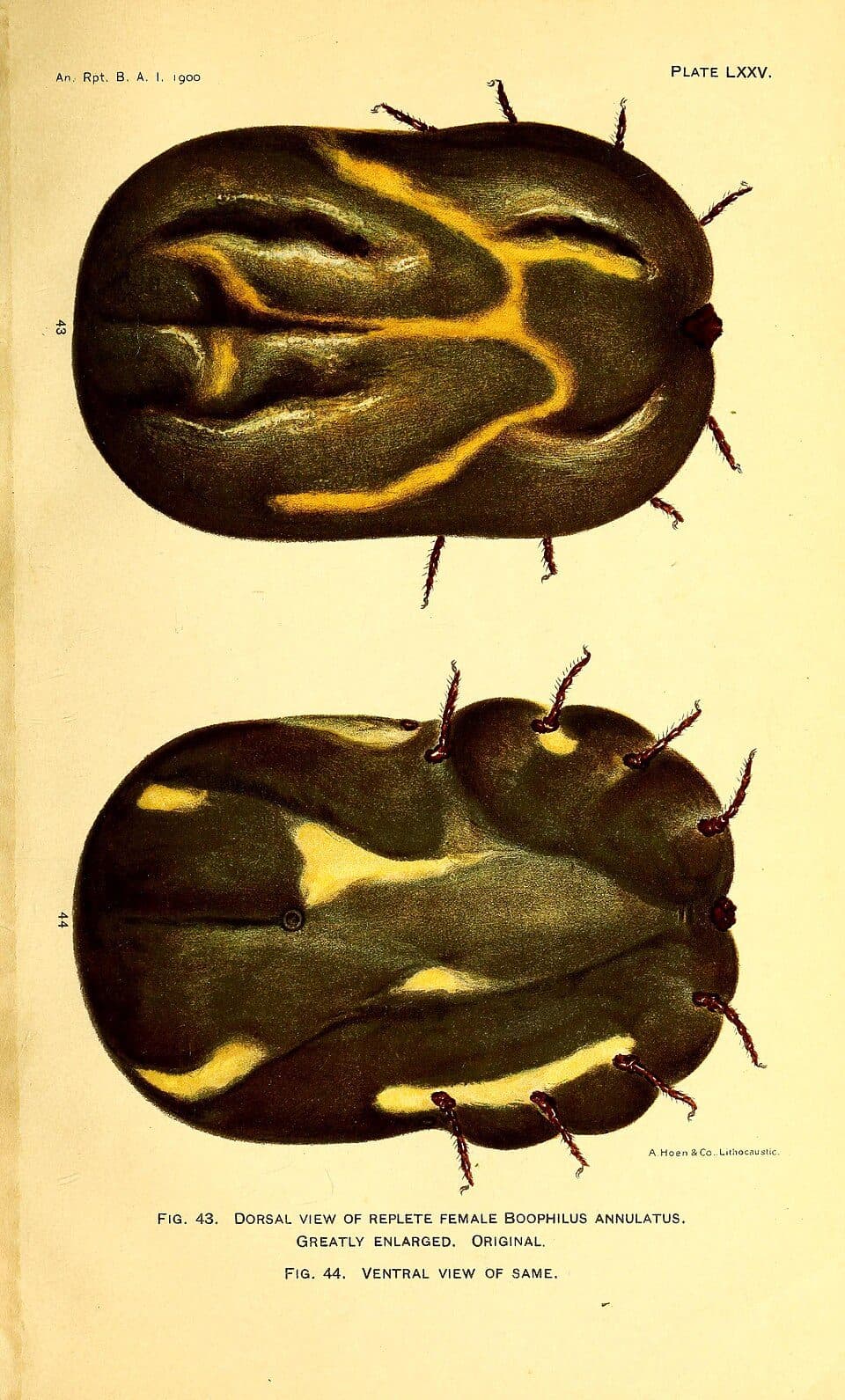
In 1893, Theobald Smith and Fred Lucius Kilborne of the federal Bureau of Animal Industry announced what they had found. Texas fever was caused by a tiny parasite in the blood. Cattle ticks carried it from animal to animal.
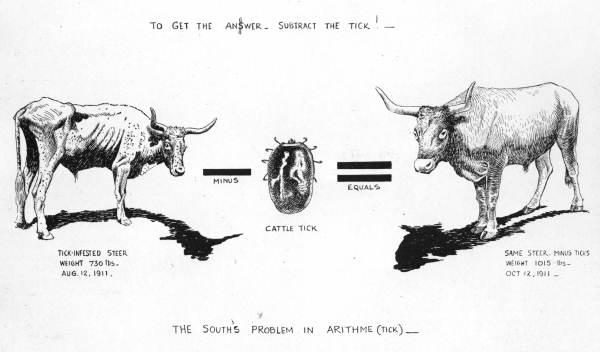
That explained everything. Texas calves caught a mild case young, survived it, and grew up as carriers. They looked healthy and carried ticks the whole way north. Cattle that had never been exposed had no defense. Texas fever can kill up to 90 percent of yearling and adult cattle.
The cost was enormous. Losses from fever ticks in the late 1800s and early 1900s were estimated at $130.5 million, which is more than $3 billion today.
Dipping the country clean
In 1906, the federal government, Texas, and the cattle industry started a program to wipe the tick out. The main tool was the dipping vat, a long trough of pesticide that cattle swam through. King Ranch manager Robert J. Kleberg is credited with building the first one in Texas.
It took nearly four decades. By 1943, fever ticks were eradicated from the United States, with one exception.
The ticks were still in Mexico, and cattle and wildlife don’t stop at the river. In 1938, the government set up a permanent quarantine zone, a narrow buffer about 500 miles long running along the Rio Grande from Del Rio to Brownsville.

The U.S. Department of Agriculture calls them mounted patrol inspectors. Everyone else calls them tick riders. About 70 of them patrol the zone on horseback, mostly alone, looking for stray cattle that crossed from Mexico and checking them for ticks. The job has existed since 1906, and it exists only in Texas.
Tony Romo has ridden the river for 45 years. “You’re kind of your own boss,” he told KENS 5 in San Antonio. His brother David rides too. “When you love your job, that’s not work, you know.”
Every cow in Kansas, Montana, and Illinois is a little safer because of a few dozen riders on the Rio Grande. Most cattlemen will never meet one.
Ticks aren’t the only pest Texas is holding at the border. Read The Sterile Fly and the Trained Eye: How Texas Is Fighting Screwworm.
More on Animal Health
See all
F9 Equine Clinic
F9 Equine Clinic, based in Columbus, Texas, specializes in comprehensive veterinary care for horses, offering mobile services to ensure accessible and high-quality treatment.

HONNAS Veterinary
Honnas Veterinary is a top-rated, AAHA-accredited animal hospital in the heart of downtown Austin, TX, offering wellness care, emergency services, and free first exams for new patients — open 7 days a week from 8am to 7pm.
Triple H Equitherapy
Triple H Equitherapy Center provides equine-assisted activities and therapies for individuals with disabilities.
Explore beyond the story
Browse listings, find businesses, or save this article for later.
 Listings
 Directory
Get the Newsletter
One reported story on Texas land, delivered free every month.
By signing up, you agree to receive emails from TexasRanches. We never sell your address, and you can unsubscribe anytime.