

Cowboys in Black and White
Laura Goodson turns rural Texas roots, family memory, and fearless experimentation into art that feels unmistakably Western.
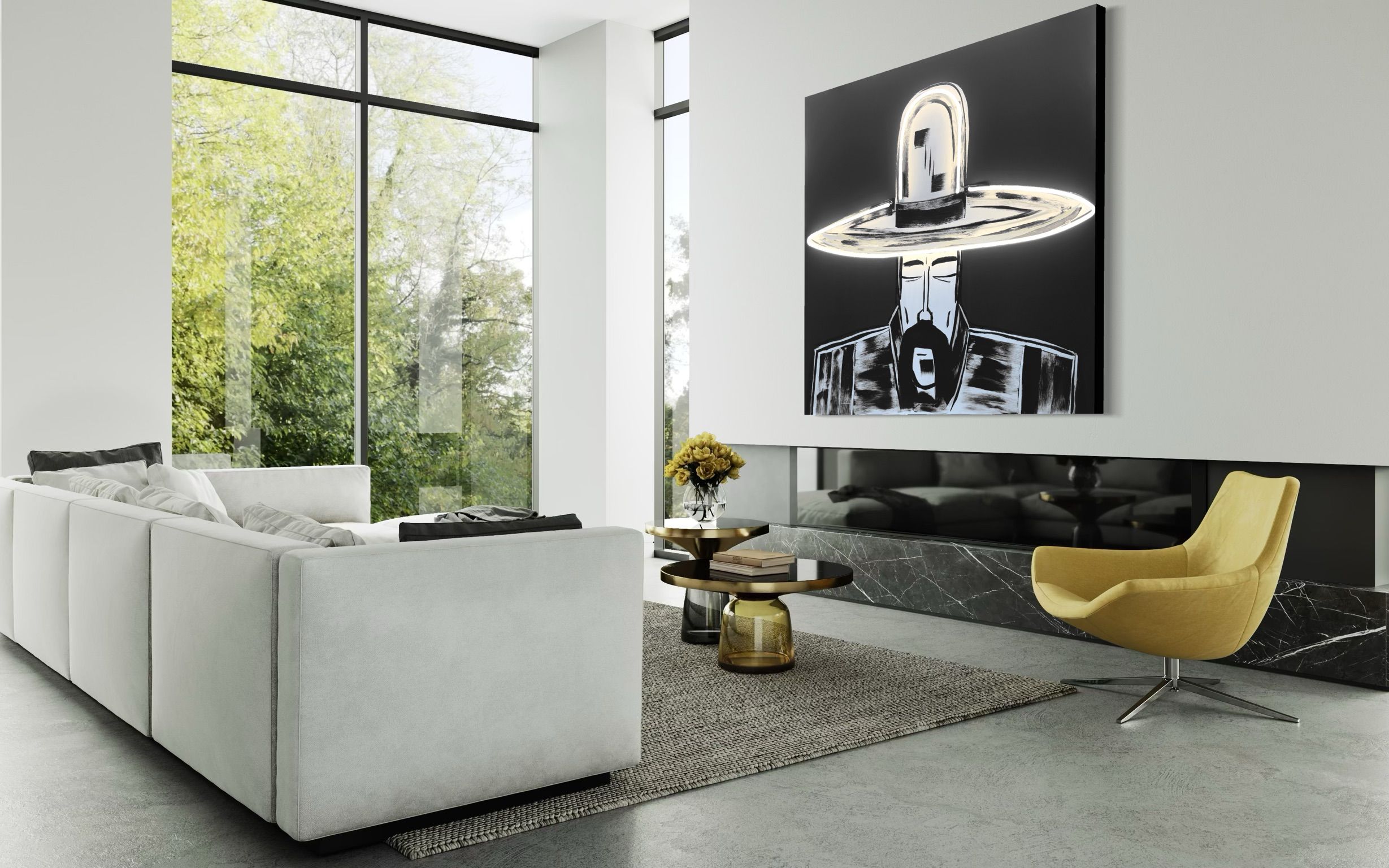
Laura Goodson is Houston-based artist, with entrepreneurial ventures throughout the Hill Country. Known for bold black and white paintings of cowboys, her work hangs in prominent Texas venues like the Hotel Drover, as well as ranches across the state and beyond. We sat down for a conversation about community, embracing failure, and how she turned her Grandpa’s signature cowboy hat into an art-scene icon.
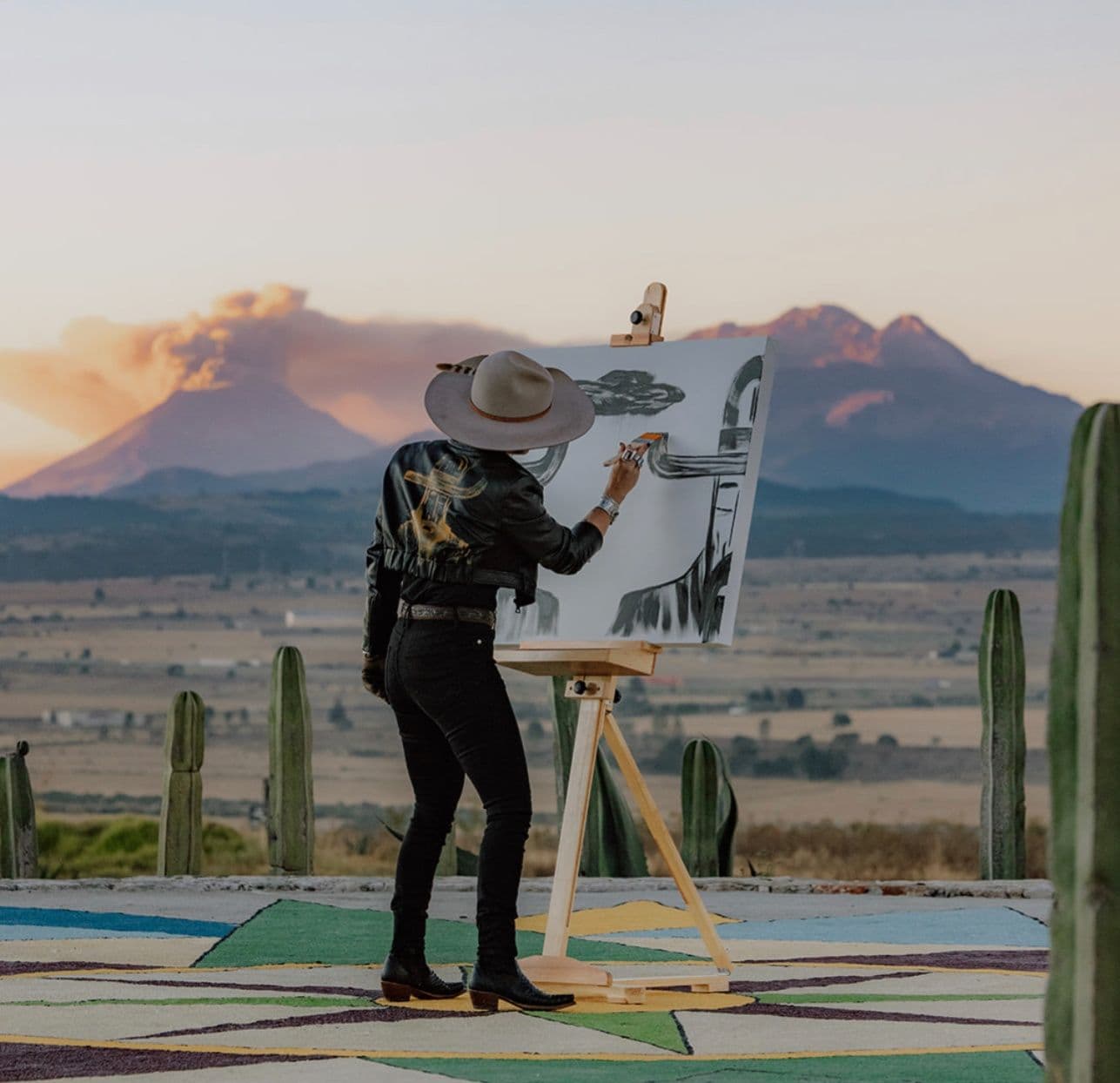
Growing up in a Rural Community
TXR: Tell us about your upbringing and how you started painting.
Laura Goodson: I grew up out in Uvalde County, in a small town called Sabinal. It's a very rural community with a lot of ranching and farming. I ended up studying Environmental Design and Construction Science at Texas A&M, then moved to Houston where I got pulled into oil and gas.
During this time, I was in pursuit of this person and they were really interested in the arts. Growing up in the rural community that I did, there wasn't a lot of exposure to the arts. When I started pursuing this person, I painted them three pieces. Those three pieces were very quickly seen by somebody else, and they asked me to do an art show.
I did that little art show and I sold pieces.
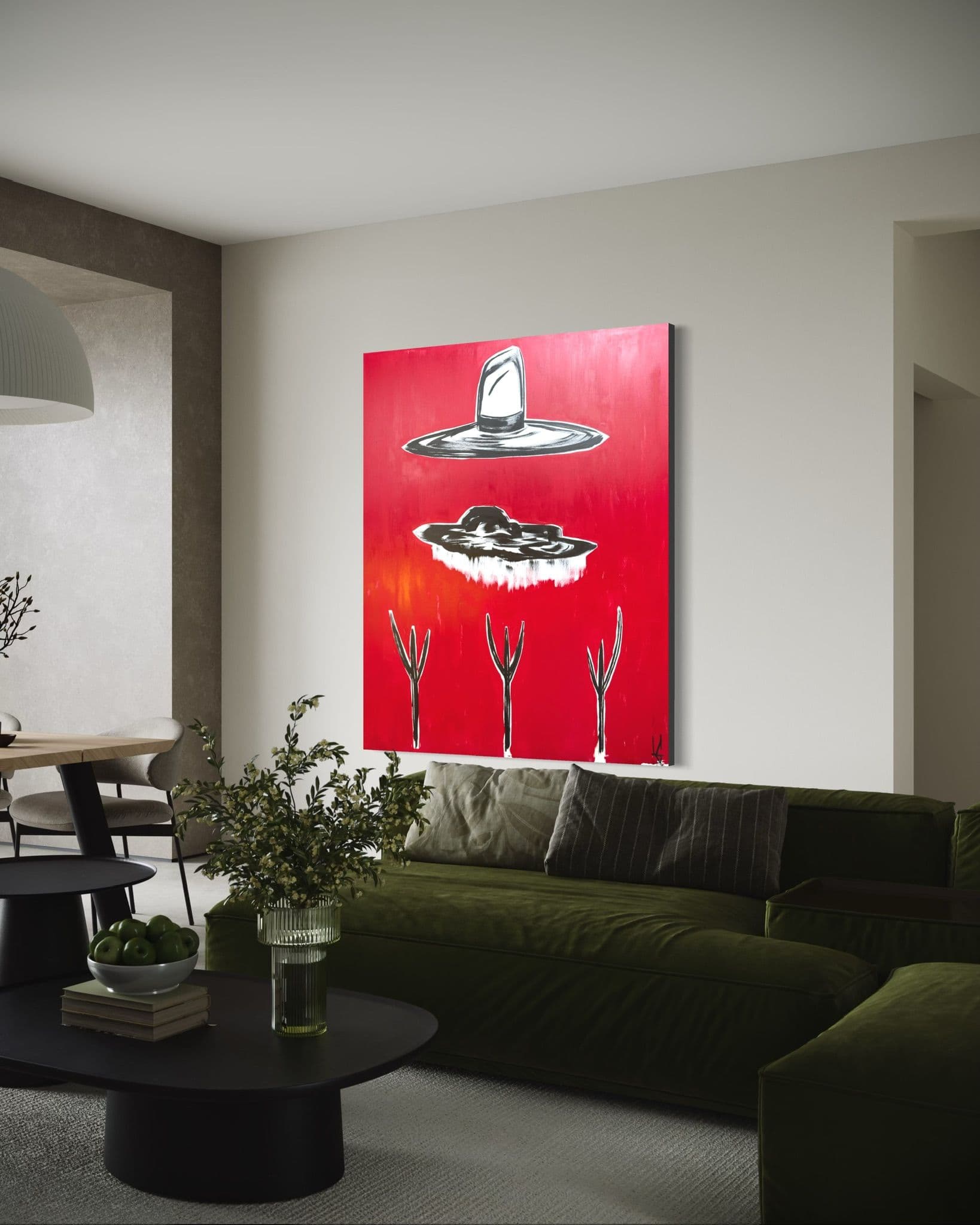
In the very beginning, I also painted cactus and I painted the landscapes of Texas—what I was exposed to and what I saw. Everything that seemed natural and was visible for me.
Grandpa Pete
TXR: Is it true your Grandpa Pete taught you how to draw a cowboy hat?
Laura: When I was little he would take a pen and do a single line cowboy hat, which I now use as my signature. It was my first exposure to any type of creative outlet, and I’ve drawn the same thing ever since.
When I first started, I painted a cowboy hat, and a cowboy came through. Then I painted another cowboy hat, and another cowboy came through. It's not even something I can consciously do. It's just what's coming through me.
I still paint a lot of cowboys, but I've experimented with cowgirls, cacti, and the landscapes of Texas that I was exposed to.
TXR: What else did you learn from your Grandpa?
Laura: Grandpa Pete did many things and was a big role model for me. He was in oil and gas. He was a boxer. He did horse racing later on, not successfully I might add. But I love that willingness to try and fail and do different things, and it's how I live my life. I try so many things and I fail at so many things, but then I have the one or two things that make me feel successful, or make me feel joy. It’s a way of living that I was exposed to early.
Recommended Properties
Trending in Texas
Early Years: Oil and Gas
TXR: Before jumping into art, you worked in oil and gas. How does your experience in that industry influence you?
Laura: Being in oil and gas, I learned so much in terms of how to progress things from concept to completion. I developed a really good sense of how to work with people and how to achieve a common goal. You might have the best solution, but it doesn’t matter if you can't work collectively and have the level of respect that allows things to go forward.
That training afforded me so many opportunities in the art space. Artists sometimes shy away from collaborating with other people. They have a hard time with the business aspects.
If I started straight out doing art, I don't think I would have had the same level of success. I have a lot of gratitude for working in construction and in oil and gas. It refined my business acumen and my ability to be a leader.
Texan Confidence
TXR: There's something really Texan about trying lots of things, and wearing a lot of hats. Is it true that you bought a motel sight unseen?
Laura: I did, and I wouldn't recommend that. There's something in me that I don't have a big fear factor that shuts ideas down for me. If I see something and it could be a pretty hairy situation, I'm like, "Let's go for it."
That confidence could be considered ignorance by other people, but I take it as, "I can figure it out."
When I put a contract in, and things started moving forward, I didn’t know how to run a motel. I had no concept of what it's like to check guests in. Day one, we had five people staying at the motel, and they were coming in asking "What's the Wi Fi?" I had no clue.
You have got to start and then improve. As things don't work, you modify and you improve. That concept is how I live.
There’s that Texas spirit of you just go for it, and if you work hard, get up, and are consistent with your try, something is going to happen. I get a lot of people who say, "I don't know how you do it." I never stop trying. I have failures all the time. But also with that numbers game, I have winning streaks.

Good ranchers know we don't do this alone. This is a place to discuss everything from legacy planning, herd management, and land stewardship to innovative revenue models shaping the next generation of ranching in Texas.
Continue the Conversation on the Forum
Join the discussion with Texas landowners, ranchers, and experts.
New to TXR? Create a free account to join the conversation.
Saying Yes
TXR: Decisive is the word that comes to mind when looking at your art and your entrepreneurial trajectory. How do you decide which projects to say "Yes" to?
Laura: I tend to say yes. Right now there's too many things happening, so I have to be selective, and I hate it. If anybody wants to work with me, I always feel like it’s such an honor. Right now, we have the rodeo coming up in Houston, and the amount of opportunities there are wild. I’m doing a party with Nan & Company Properties and Forbes. Incredible. I’m doing something with Yeti, Turtle Box, and with Moreau Paris painting on their bags in River Oaks District.
A lot of my decisions are gut decisions. I make a lot of decisions by asking, "Is this going to be good for the community? Does this give people access to something they didn't have access to before?"
TXR: You're a serial entrepreneur, and recently launched a collaborative menswear boutique, Cowboy House. Why Menswear?
Laura: I have my gallery in Round Top, Texas. Out there, they have three antique shows a year, but my gallery is year-round, so I was out there every weekend, especially in the beginning. Being in Round Top, there's a big fashion focus. I started producing a fashion show with my friend Marla Hurley, who is a fashion icon and has her own luxury boutique there. But we didn't have a menswear line in the fashion show. It was one sided. Then in conjunction with that, men were constantly coming into my gallery and asking, "Where do we shop?" There just weren’t men's stores.
I talked to Marla. "Look, I have way too much on my plate. You probably have too much on your plate. But this is what's needed in this little community, would you want to partner?" And so we partnered and opened Cowboy House, which offers vintage Western wear with pre-loved designer pieces, and it's been incredible. The community has been awesome and Former Astros players and other really incredible men are consigning with us.
There are always two possible outcomes: it’s going to be a success, or it’s going to be a failure. Either way, we’re not going to leave anything on the table. So far, it’s been a success.
TXR: Most artists would set up shop in the city. Why did setting up in rural Texas feel right to you?
Laura: Round Top is a rural area, but it has high commerce and high traffic, with lots of engagement as it relates to home furnishings and art. There's something about doing things that you love in places you love that makes it magical.


"I make a lot of decisions by asking 'Is this going to be good for the community?'"
— Laura Goodson

"I make a lot of decisions by asking 'Is this going to be good for the community?'"
— Laura Goodson
Experimenting with Art
TXR: You became known for painting bold, monochromatic cowboys. More recently, you’ve experimented with colors, cowgirls, landscapes, and now sculptural and lighted elements. What sparked that evolution?
LG: First, I launched a series called Cowboys in Color. I was doing a lot of healing at that time, and thinking about how we try to flatline ourselves because we don't want other people to know that we're grieving, angry, sad, anxious or stressed.
For me, painting with color was not comfortable at the time. It was me exposing myself and being vulnerable. It allowed me to use my sadness as a power to understand why I feel a certain way and how I can overcome it.
When I started doing the cowgirls, it was all about recognizing self worth, value, and power. I think women are the most powerful creatures on this planet.
With the light up pieces, I did a series called Inner Outlaw with Adam Smolensky, an artist out of San Antonio. That series was about illuminating the inner badass, the go-getter. The part of you that says, ‘You know what? I can do something outside of the box and push myself.’ Now, I'm moving into three-dimensional pieces and sculptural pieces. It’s been a journey, and I'm excited to see what comes in the next year, because I'm wanting to push myself into spaces I've never been in.
TXR: What advice would you give to an aspiring artist starting out?
Laura: Listen to yourself. There's a lot of critics, and there's a lot of people that will tell you you're doing it wrong.
When we're younger, we're looking for people to support us and tell us to keep going. What I’ve found is a lot of people don't have the capacity to do that because they're not on your path, and they don't know that you're capable, because they're not. They couldn't live in your shoes. Your guidance needs to come from within. I've found that people that are doing more than me never critique me. It's always the people that are on their sofa. Listen to yourself and do what is authentic to you. Go full in, pedal to the metal, and don't listen to the critics.

Explore beyond the story
Browse listings, find businesses, or save this article for later.
 Listings
 Directory
Get the Newsletter
One reported story on Texas land, delivered free every month.
By signing up, you agree to receive emails from Texas Ranches. We never sell your address, and you can unsubscribe anytime.