

Architecture, Family, and Life on Texas Ranch Land
Trey and Angela Rabke share how Texas ranch land shaped their family, architecture, outdoor education, and commitment to conservation.
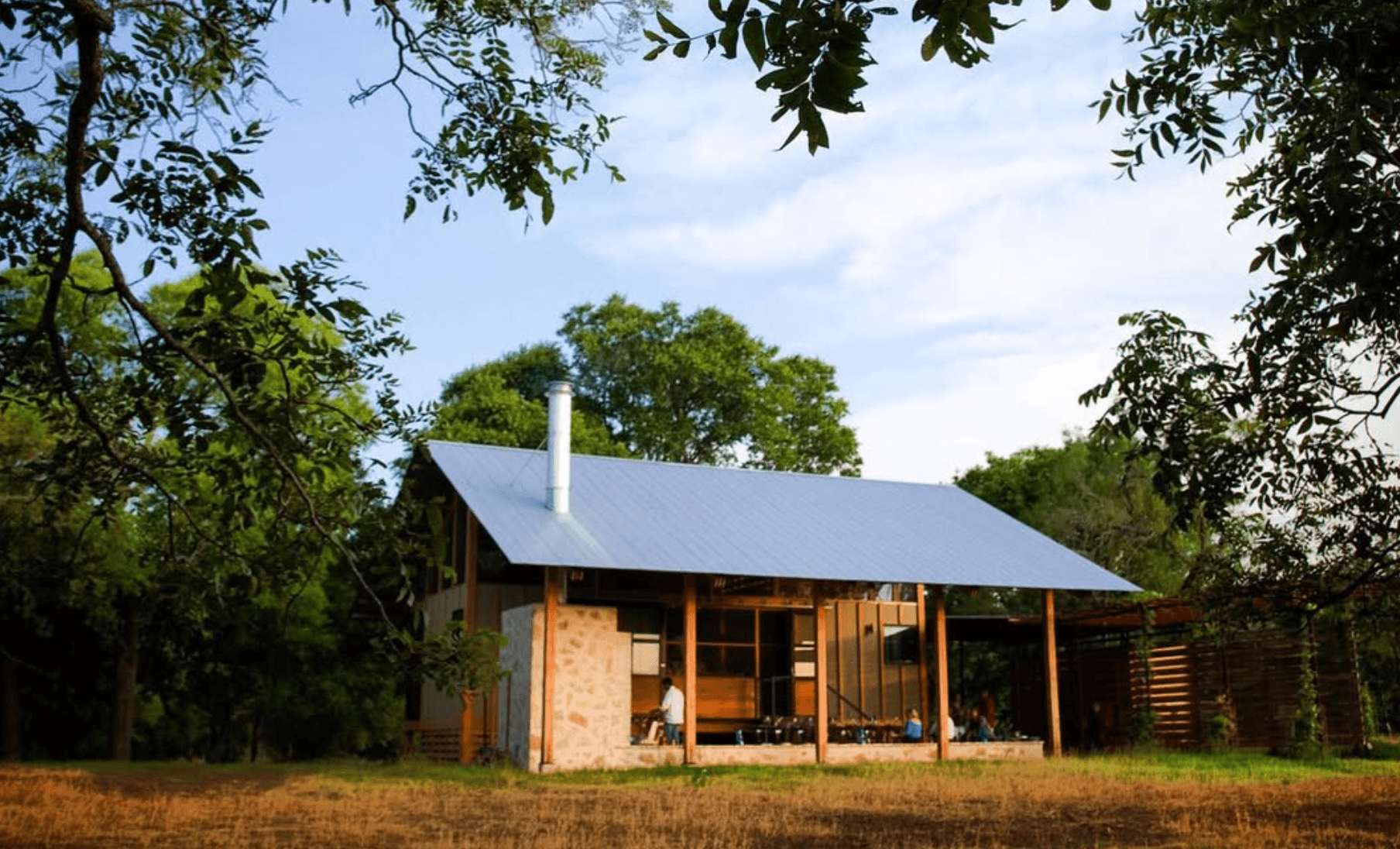
Trey and Angela Rabke grew up on family ranches in the Texas Hill Country, where time spent outdoors became a foundation for how they live today. In our conversation, Trey reflects on how his time at Lake Flato influenced the architecture on his own family’s ranch, and Angela shares their family’s unique approach to educating outdoors and a commitment to conservation.
Growing Up on Texas Ranch Land
TXR: Tell us about your upbringing and connection to Texas ranch land.
Trey Rabke: I grew up primarily in San Antonio. I was born in Corpus, we spent a lot of time in South Texas, in brush country, hunting and ranching. It’s a harsh place, but it’s a beautiful place if you stand still a minute and really take it all in.
I think how you live in a place like that, and understanding the environment, were some of the key moments that sparked my interest in architecture. How do you exist comfortably in a place like that, and how do you appreciate the place through the built environment.
I went to UT Austin for architecture school. I knew about Ted Flato and David Lake, and they were doing what I wanted to do—working on these remote projects, big ranches, using regional materials and tradition, and being very specific to the environment in a contemporary way. Right out of school, I came back to San Antonio and went to Lake Flato.
Angela Rabke: I grew up spending every weekend in Blanco, because that’s where my family had—and still has—a place. Family connection to land and space, that ability to raise children in a space where they can be open and free and see a horizon, was equally important to us.
Trey and I have known each other since we were little. I remember even in high school going to his family’s place in Sisterdale. In his family, what a special place it is. All manner of milestones happened in Sisterdale.
Designing for the Hill Country
TXR: Can you tell us about your family’s land and how it evolved over time?
Trey Rabke: My mom and stepdad bought a place on the Guadalupe River when I was a young kid. We’d go out there and picnic. There was a little old hunting cabin there, just one room. We built a porch early on. It was an open-air porch next to the river. That was our living room. That porch became everything. We did Thanksgiving and Christmas out there.
Fast forward after college. The Hill Country had two very catastrophic floods. In 2002, Sisterdale got hit pretty good. The little house was fine, but it got wet.
My mom and stepdad were like, you’re fresh out of architecture school—what should we do with this?
And I said, let’s keep that great porch. It has so many memories at this point. Let’s keep the stone porch, build on the same footprint, same small, modest scale.
We raised it. The new structure is elevated above the ground on big, strong piers so it never floods again.
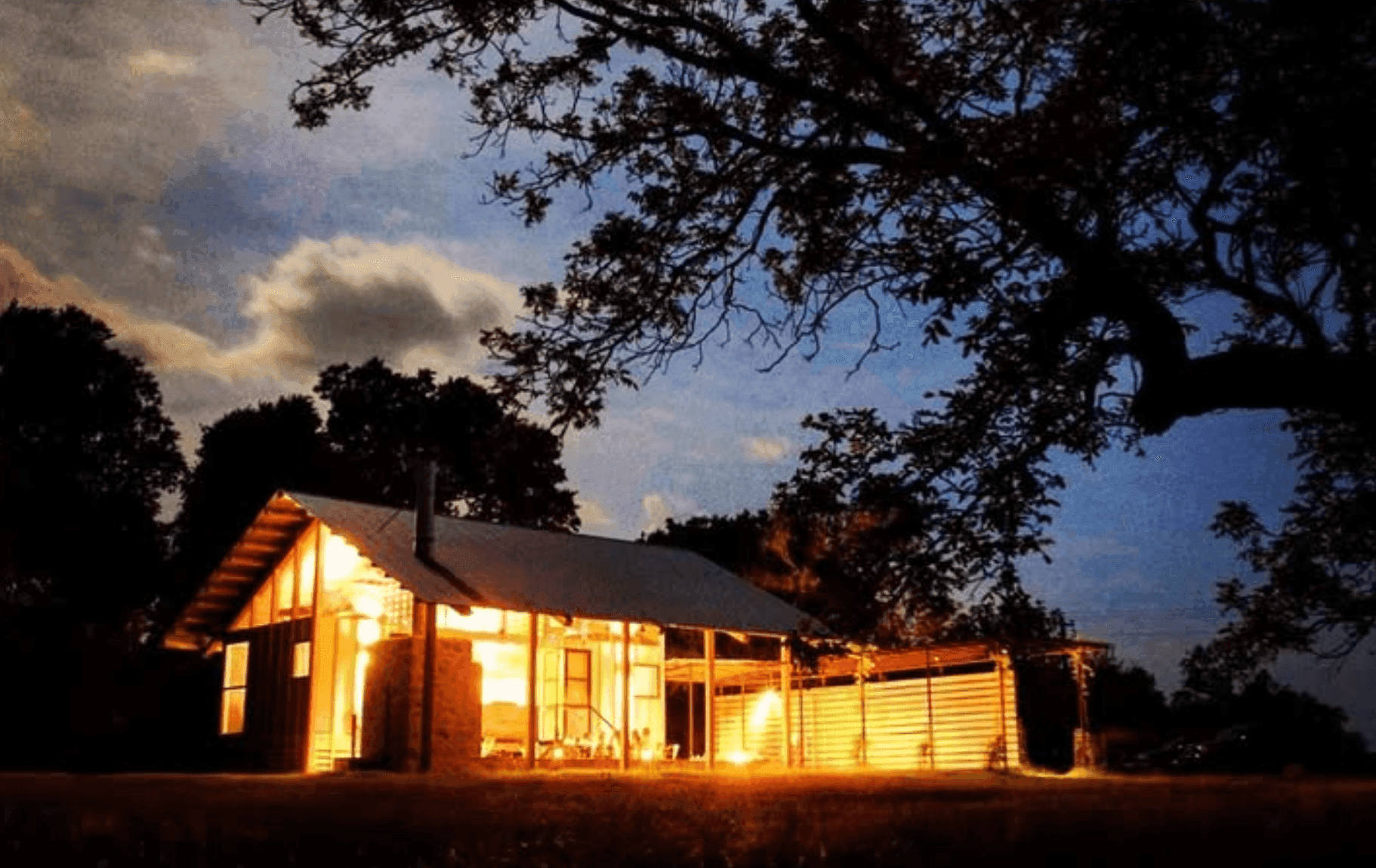
At the same time, we kept that little bit of memory and tradition in the porch. That current cabin we have up there—we still use it the same way. It’s still the hub of activity when we’re hanging out on the river.
The goal was always connecting you to the environment, getting you comfortable just being outdoors in that place.
Recommended Properties
Trending in Texas
Get Texas Land Alerts
Be the first to see curated land listings from across Texas.
By signing up, you agree to receive emails from Texas Ranches. This site is protected by reCAPTCHA and the Google Privacy Policy and Terms of Service apply.
Outdoor Education and Family Life
TXR: How does spending time on that land show up in your family life today?
Angela Rabke: Our son Storey has a really unique diagnosis, and his learning profile is complicated. When we decided to pull the him out of traditional school and create what we call Storytime School, connection to the country lifestyle was really important to us.
He has Farm Fridays. He does chores. There are therapeutic aspects of horseback riding and equine therapy. Learning how to grow your own food. He has pet quail. He’s mostly vegetarian because he loves all the little animals.
Trey Rabke: Having this opportunity to just spend so much time with our kids in that place, they’ve grown a real attachment to it.
We want to leave the land better than we found it. A healthier environment. And if they love it, I think they’ll continue on protecting it.
Stewardship in a Changing Hill Country
TXR: The Hill Country is changing quickly. What are you seeing?
Trey Rabke: The Hill Country has changed dramatically since I was a kid. Kendall County is having some of the highest growth in the state. You’re seeing more and more land fractured and just gone. We’re grateful we have some great neighbors, whether they’re putting their properties in conservation easements or doing their best as land stewards to keep it natural.
TXR: How do you think about private land alongside broader access to nature?
Angela Rabke: We’re very aware that we’re lucky to have access to private land, and not everyone does.
Not everyone needs to own land to benefit from it. Parks and shared spaces matter. The benefits of being in nature and learning how to care for something living are universal.

"The benefits of being in nature and learning how to care for something living are universal."
-Angela Rabke
What Land Teaches the Next Generation
TXR: I think that will lead nicely into our next questions. Can you tell us about the Sisterdale Sanctuary and how that came together?
Trey Rabke: There was a piece of property that came up for sale right at the entrance to Sisterdale. About forty acres, with Sister Creek running through it. It’s your first impression of the town.
At one point, there was talk it was going to be a gas station or a commercial development.
We found some great partners, local landowners and conservation-minded people. We raised donations for the Cibolo Center for Conservation in Boerne and they were able to purchase the property for them to steward.
When you drive into Sisterdale now, you get that view down the valley, the creek, the cypress trees. It’s not going to change.
Angela Rabke: What mattered to us was protecting a viewshed and protecting a sense of place.
Texas land conservation is often talked about in terms of tens of thousands of acres, but this was something modest. It was possible.
TXR: What does day-to-day stewardship look like for you right now?
Trey Rabke: Texas is a hard place. We’ve had a terrible drought for more than a decade. We’ve had floods. We’ve lost a lot of trees.
Right now we’re taking down damaged oaks, planting native ground cover, and slowly rewilding—bringing back a more diverse mix of native species.
Angela Rabke: Trying to make these kinds of spaces available to more people matters to us.
TXR: What do you hope people take away from your story?
Angela Rabke: That being connected to land changes how you think about the future.
Explore beyond the story
Browse listings, find businesses, or save this article for later.
 Listings
 Directory
Get the Newsletter
One reported story on Texas land, delivered free every month.
By signing up, you agree to receive emails from Texas Ranches. We never sell your address, and you can unsubscribe anytime.